

What types of rice are there and what can you do with them?
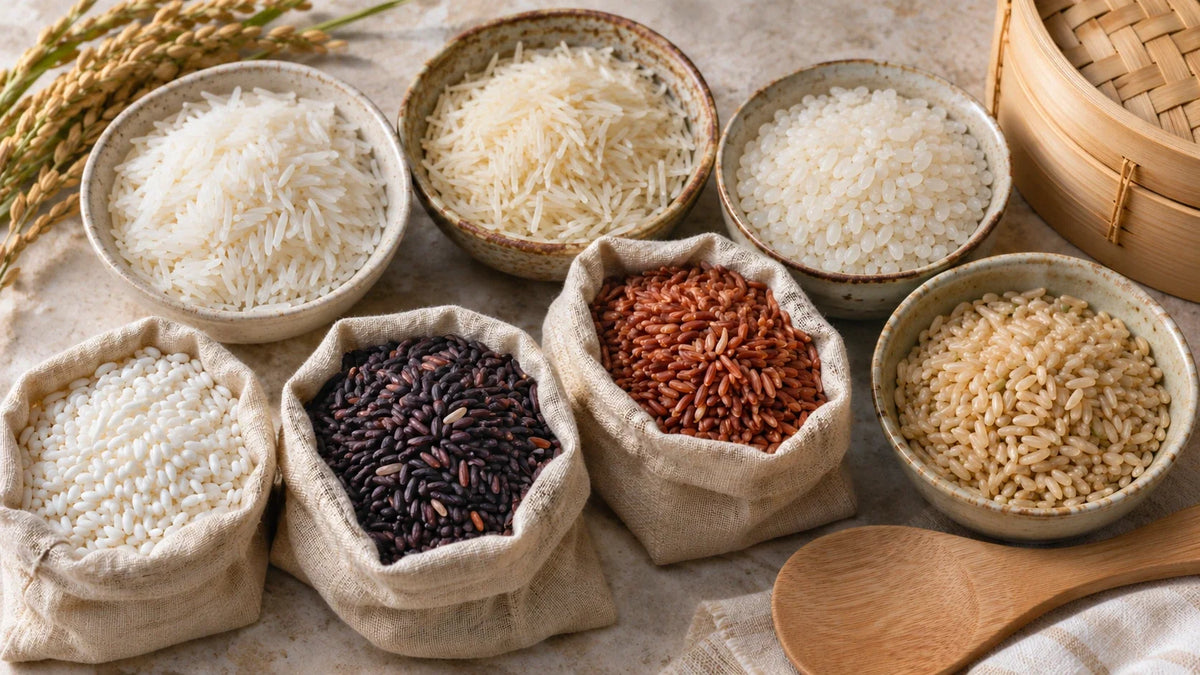
Do you ever eat Indonesian nasi goreng, Japanese sushi, or Italian risotto? Then you know that these dishes have one thing in common, and that is the base. They are all made from rice. From long aromatic grains from Thailand to short sticky grains from Japan. Rice comes in different colors, aromas, and sizes, but what can you actually do with all these different types of rice? We will explain it to you!
Discover the different types of rice.
What is rice?
Rice is a grain and, like wheat and oats, belongs to the grass family. However, it is a very unique grain, as there are more than 40,000 varieties. We can divide them into two main categories: Indica and Japonica. Indica varieties are often long-grain rice varieties, and Japonica are often short or medium-grain rice varieties. From white rice to brown rice, we will explain all the different types of rice and which ones you can choose for your rice dish.
White rice
This is actually a collective term for different types of rice where the brown husk has been removed. This husk is naturally on the rice when it is harvested. By removing the husk, only a white grain remains, hence the name white rice. However, this does not mean that all white rice is the same, as there are several types of white rice with different properties. Jasmine rice is the best-known white rice, so we will start with that.

Jasmine rice
Jasmine rice
Also known as ‘Hom Mali’, which literally means ‘the scent of jasmine’ in Thai. When you have cooked this rice, take the lid off the rice cooker and the steam rises, you can smell the wonderful aroma. It is one of the most aromatic rice varieties, and that makes it a very popular type. You will mainly find this rice in Indonesian, Thai, and Chinese dishes. Do you want the best rice with the most flavor? Then jasmine rice is perfect! Do you like eating organic? Then this organic jasmine rice is highly recommended.
- Properties: Long grain of the Indica type.
- Dishes: Nasi Kuning, Pad Kra Pau, Yang Chow Fan.
- Products: Aroy-D Thai Hom Mali, Vientiane Jasmine Rice, Organic Jasmine Rice.
Pandan rice
Pandan rice is also very popular, but it is actually not a real rice variety! Sometimes it is the same as Jasmine rice and is simply sold under the name pandan rice. But pandan rice can also be a combination of white rice and extract from wonderfully fragrant pandan leaves. Both pandan rice and jasmine rice have a strong aroma and can be used in the same types of dishes.
- Properties: Long grain of the Indica type.
- Dishes: Nasi Kuning, Pad Kra Pau, Yang Chow Fan.
- Products: Dragon Pandan Rice, X.O. Pandan Rice.
Basmati rice
After jasmine and pandan rice, basmati rice is a very well-known variety. It is widely grown in India and is known for its aromatic character with a slightly firmer bite than jasmine or pandan rice. This is because the grain is slightly finer and there is less starch in this rice. This results in a drier grain that you can use well in Indian dishes, for example. With this rice you can make biryani, for example, a deliciously spicy rice dish with meat and vegetables. It is a true classic in Indian cuisine and is not difficult to make at all.
- Properties: Long grain of the Indica type.
- Dishes: Biryani, Chicken Curry, Rice Salad.
- Products: Tilda Basmati Rice, Mali Flower Basmati Rice, Mehnat Basmati Rice.
Surinamese rice
If you are going to make Surinamese nasi, this is the rice you need. Surinamese rice cooks slightly drier and fluffier, making the rice easy to mix with other ingredients. Perfect for fried rice dishes!
- Properties: Long grain of the Indica type.
- Dishes: Surinamese nasi, Surinamese rice dishes.
- Products: Mali Flower Surinamese Rice.

Japanese rice
Japanese rice
If you have ever cooked Japanese food or eaten in Japanese restaurants, you know that this is a special type of rice. It is a short-grain rice that is much stickier than other rice varieties. That is why it is so good for making sushi. This rice is therefore really different from other types of white rice, but did you know that there are also many different qualities of it? If you have ever eaten in a high-quality Japanese restaurant, there is a good chance you were served Koshihikari rice. That is a very popular type of rice that falls under the Japonica category. Koshihikari is known for its excellent quality and is therefore used by the best chefs worldwide.
- Properties: Short grain of the Japonica type.
- Dishes: Sushi, Japanese rice dishes, Poké bowl.
- Products: Koshihikari, Itamae Sushi Rice, Shinzu Sushi Rice, Premium Grade Short Grain Rice, Nishiki Premium Grade Rice.
Sticky rice
This rice is also called glutinous rice, not because it contains gluten, but because of the sticky texture that reminds you of glue. The longer you cook it, the softer and stickier the rice becomes. You can make rice pudding with this, a dish that is often eaten for breakfast in Asia in combination with broth, vegetables, and chicken. Another sticky rice dish that we are really fans of is mango sticky rice. This is a sweet dessert from Thailand and is made from sticky rice, coconut milk, and mango. If you have never made this before, it is highly recommended! However, mango sticky rice is not the only dessert you can make with sticky rice. Many Asian cuisines have desserts based on this special rice, such as Indonesian wajik and Philippine biko.
- Properties: Short grain of the Japonica type.
- Dishes: Bubur, Congee, Mango Sticky Rice, Wadjik, Biko, Lemper.
- Products: Dragon Ketan Rice, X.O. Ketan Rice, Aroy-D Glutinous Rice.
Parboiled rice
For white rice, all the rice husks are removed, and for brown rice, only the outer husk is removed. With parboiled rice, the rice is partially boiled before the outer husk is removed. This allows the rice to retain more vitamins and minerals, making it a healthy alternative to black or brown rice. Although brown rice is the healthiest option, parboiled rice has the advantage of not needing to be cooked for as long.
- Properties: short, medium, or long grain of the Indica or Japonica type.
- Dishes: Fried rice with parboiled rice, pilaf with parboiled rice.
- Products: Parboiled Rice.
Samba rice
Due to its pearl shape and shine, this may be one of the most beautiful rice grains there is. It is the best-known rice from Sri Lanka. There, it is mainly served on special occasions, such as family parties and traditional festivals. This rice has a slightly sweet taste and can be used in many different dishes.
- Properties: short-grain rice.
- Dishes: Biryani, Ghee Rice.
- Products: Amutha Muthu Samba Rice, Amutha Keeri Samba Rice.

Brown rice
Brown rice
Where we started the list with white rice, we have now come to brown rice. Actually, this is the same rice grain, but the husk has not been removed. This keeps the rice brown and gives it a firmer bite. Do you want to eat healthy? Then brown rice is a great option for you. Because the husk is retained, this rice contains more fiber, vitamins, and minerals than white rice. You can buy brown rice in different varieties. For example, you can get brown jasmine rice, but also brown basmati rice. You may also know brown rice by the name brown rice. It might be a little confusing, but it is exactly the same! In addition to regular brown rice, we also have trio rice in our range. This is a mix of pandan rice, red/purple rice, and black rice. A colorful alternative to regular brown rice.
- Properties: Long grain of the Indica type.
- Dishes: Curry with brown rice, Salad with brown rice.
- Products: Organic Brown Jasmine Rice, Premium Japanese Brown Rice, Trio Rice.
Black rice
In China, this was also known as forbidden rice because it was exclusively reserved for Chinese royalty. Nowadays, it is internationally known and is also served widely in other Asian countries. Due to the black color, the rice naturally stands out a lot, but did you know that the color changes slightly when the rice is cooked? It then often looks more purple and is therefore sometimes also called purple rice. This dark color is because this rice contains a pigment called anthocyanin. This is a powerful antioxidant that can also be found in other products such as blueberries and blackberries. Black rice tastes slightly nutty because the husk is still on the grain.
- Properties: Available in both short-grain and long-grain varieties. Short grain of the Japonica type, long grain of the Indica type.
- Dishes: Bubur Hitam, Mango salad with black rice, Thai Curry with black rice.
- Products: Aroy-D Black Ketan Rice, Organic Black Cargo Rice.
Risotto rice
Do you ever eat risotto? There is a good chance that it is made with this rice. Carnaroli is one of the best-known rice varieties for making risotto. The grains are quite large and retain their shape after cooking. This is a difference with, for example, sticky rice, where the rice grains become much softer and mushier. Similar rice varieties are Vialone and Arborio, but Carnaroli is considered the best rice. This is because this rice is best at absorbing moisture, allowing the aromas to infuse much better during cooking.
- Properties: Short grain of the Japonica type.
- Dishes: Italian Risotto.
Wild rice
This is a strange one, because it is not real rice. All the previously mentioned rice varieties are derived from the Oryza plant, and wild rice is derived from the Zizania plant. So it looks a lot like rice, but it is not! The flavor of wild rice is much stronger. When you eat this rice, you first taste the crispy outer layer and then the soft, nutty interior. Wild rice also fills you up faster, so you often eat it in smaller portions than other types of rice. Wild rice is not often used in traditional rice dishes because the flavor and texture are really very different. You can cook very healthy dishes with it, for example by making a bowl with a good source of protein, such as chicken or fish, and of course vegetables. A nice tip: mix wild rice with another type of rice for a special flavor experience. Just make sure to cook the two types of rice separately due to the different preparation methods.
- Properties: wild rice from the Zizania plant.
- Dishes: Salad with wild rice.

