

Mexican hot sauce: from Valentina to habanero from Yucatán
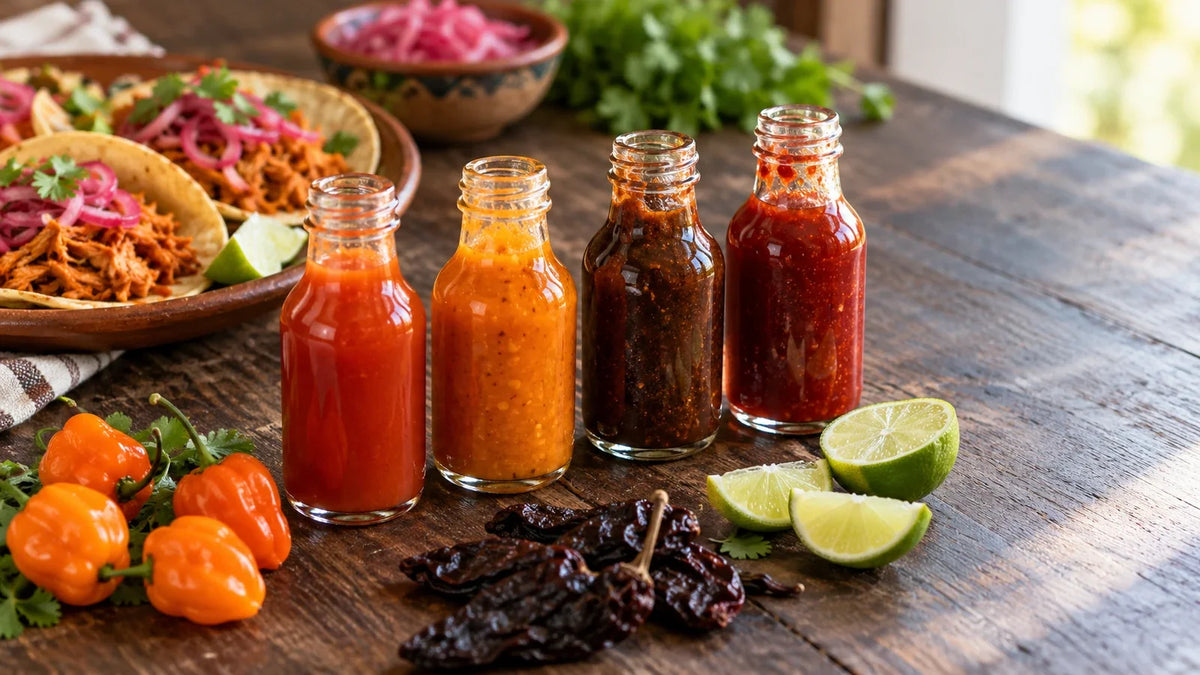
On a Mexican table, next to the lime wedges and salt, you’ll almost always find a few bottles of salsa picante, and a taco rarely makes it into your mouth without first getting a few drops. Mexican hot sauce isn’t meant to make you sweat, but to wake up your food with sourness, salt, and a warmth that returns with every bite. There are roughly two families: the thin table sauces like Cholula and Valentina, and the fiery habanero sauces from Yucatán. In our shop in Amsterdam, they stand side by side on the shelf, and in this guide you’ll learn which bottle is right for you. These are the same bottles you’ll find in Mexican supermarkets, from Valentina and Cholula to El Yucateco. If you want to know how hot sauce works in general first, start with Hot sauce 101.
What is Mexican hot sauce?

Each bottle in this guide has a heat rating from 1 to 5, the same as in our other hot sauce articles. This rating is our own estimate based on the pepper and what the label says, so always taste carefully.
 Cholula Original table sauce · árbol and piquínThin and savory, for almost anything2/5
 Valentina table sauce · yellow labelSour, mildly spicy, and perfect for generous use2/5
 Valentina Muy Picante table sauce · black labelThe same flavor, but with more heat3/5
 Cholula Chipotle chipotle · smokyWarm and smoky, great with beans and eggs3/5
 El Yucateco Red habanero · YucatánRed habanero with tomato, very hot4/5
 Tajín Chamoy chamoy · sweet and sourFor fruit, chips, and popcorn1/5
What Mexican table sauces are there?

 Cholula Limón Cholula · 150 mlWith lime, fresh with fish and salad2/5
 Cholula Chili Garlic Cholula · 150 mlWith garlic, delicious over eggs2/5
 Valentina Tamazula · 1 lThe liter bottle for those who pour it over everything2/5
 Huichol Huichol · 190 mlWith vinegar and spices, mild in character2/5
 Bufalo Clásica Bufalo · 150 gChili peppers and spices, the classic2/5
 Bufalo Extra Picante Bufalo · 150 gThe hotter Bufalo3/5
 La Botanera Clásica La Botanera · 370 mlWith tomato, onion and garlic, also as a dip2/5
Valentina: yellow or black label?

What makes habanero sauce from Yucatán different?

The habanero is related to the scotch bonnet and the Madame Jeanette; all three are Capsicum chinense. You can read more about that Caribbean and Surinamese side in Caribbean hot sauce.
 Marisquera Black El Yucateco · 150 mlHabanero for fish and seafood4/5
 La Anita Xtra Picante La Anita · 120 mlRed habanero with tomato, extra hot4/5
 La Meridana Red La Meridana · 150 mlHabanero with fresh tomato and spices4/5
 La Meridana Smoked La Meridana · 150 mlSmoked habanero with onion and garlic4/5
 Chimay Roja Chimay · 150 mlHabanero, vinegar, salt and olive oil4/5
 La Costeña Roja La Costeña · 145 mlRed habanero, one bottle for every day4/5
Habanero with fruit

[[products:mexican-habanero-sauces]]
What is chipotle hot sauce?
 Cholula Chipotle Cholula · 150 mlSmoky and round3/5
 Chipotle Agave La Meridana · 150 mlChipotle with the mild sweetness of agave3/5
 Habanero con Chipotle La Anita · 120 mlSmoke from chipotle and fire from habanero4/5
What is salsa macha?
Salsa macha is the Mexican chili oil: dried peppers fried in oil with peanuts and sesame seeds, coarse and crunchy instead of thin and sour. This makes it more like Chinese chili crisp than Valentina, and it is just as delicious on eggs, tacos and rice. With our recipe you make it yourself, and you can read more about chili oil in general in Chili oil and Lao Gan Ma.
What is chamoy and what do you eat it with?
 Tajín Chamoy Tajín · 455 mlChili, lime and salt, sweet and sour1/5
 Chilerito Chamoy El Chilerito · 355 mlSour, sweet and spicy for fruit and snacks1/5
 Chilerito Chamoy El Chilerito · 1 lThe large bottle for fruit cups1/5
 Tajín Mild Tajín · 455 mlMild, with lime and salt1/5
[[products:mexican-table-sauces]]
How do you use Mexican hot sauce?

With street food like tacos and elote, corn on the cob with mayonnaise, cheese and chili, lime, salt and table sauce come together, and it is precisely that combination of sour and spicy that holds everything together. With shrimp, fish and ceviche, you prefer a sauce with lemon or a marisquera, while with a stew like cochinita pibil from procureur you often use a few drops of habanero sauce, together with pickled red onion. Shake the bottle well first, use less than you think you need and taste after every bite to see if it needs more, because with habanero one extra drop is too much too quickly. Store it as it says on the label; many bottles say they should be refrigerated after opening.
Not sure which bottle to start with? Then take a Valentina or Cholula for everyday use and an El Yucateco Red Habanero for when you want more fire, because with those two you are well on your way with almost any Mexican dish. If you want to choose per dish, check out Which hot sauce for what.
Can you make Mexican hot sauce yourself?
Dried chile de árbol is the base for salsa de chile de árbol, the spiciest of the Mexican table salsas, and with ancho and guajillo you make a deep, red salsa roja. Briefly roast dried peppers in a dry pan until they become fragrant, soak them in hot water and then blend them finely, because that is how your salsa gets the full flavor you won't get from a bottle. For a Yucatecan kick use dried habanero; it is quite hot, so start with half a pepper.
Mexican hot sauce Cholula, Valentina, El YucatecoTable sauces, habanero and chamoyShop now Salsa casera, verde, taqueraThick salsas for dipping and cookingShop now
 Whole chili peppers ancho, árbol, habaneroTo make salsa and hot sauce yourselfShop nowAll hot sauces from mild to extremeAlso American, Caribbean and AsianShop now
Recipes with Mexican hot sauce
In these recipes, the hot sauce goes through the sauce or the bottle just sits on the table.


Also with pozole rojo and guacamole a bottle of hot sauce belongs on the table.
All Mexican hot sauces in one place
From Cholula and Valentina to habanero sauce from Yucatán, from mild to hot.
Frequently asked questions
Which Mexican hot sauce is the mildest?
Chamoy and Tajín Mild Hot Sauce are the mildest. Among the table sauces, yellow Valentina and Cholula Original are a good place to start.
What is the difference between Valentina with the yellow and the black label?
The yellow label is the regular, spicy Valentina. The black label is Muy Picante, with the same flavor but more heat.
What is the difference between salsa and hot sauce?
Hot sauce is thin and you use it in drops or a splash. Salsa in a jar, such as salsa verde or casera, is thicker and you use it as a dip or for cooking.
Is Mexican hot sauce hotter than sriracha?
That depends on the bottle. We consider table sauces like Valentina and Cholula to be slightly milder, while habanero sauces from Yucatán are hotter. Read more about sriracha in Sriracha explained.
Why is habanero sauce so hot?
Habanero is one of the hottest peppers in Mexican cuisine and, in addition to its heat, has a fruity aroma. Therefore, start with a few drops.
Is Tapatío the same as Valentina?
No, they are different brands. They do belong to the same family of thin, red table sauces.
What do you eat chamoy with?
You pour chamoy over fresh fruit such as mango and cucumber, over chips and popcorn, or you use it as a dip.
Does hot sauce need to be refrigerated after opening?
Follow the label; for many Mexican sauces, it says to refrigerate them after opening.
With a bottle of Valentina or Cholula on the table and a habanero sauce from Yucatán on hand, you actually have a large part of Mexican cuisine in your home, because with them you give an ordinary quesadilla just as much character as a dish of cochinita pibil that you share with friends. Start with a few drops, taste as you go, and discover which bottles are right for you, because even in Mexico everyone has their own favorite and their own idea of what is spicy. If you are standing in front of the shelf at the toko in Amsterdam and are not sure, feel free to ask us, and if you want to read more about all the types of hot sauce and the spiciness scale, you will find everything in Hot sauce 101.

