


Chinese vinegar explained: all types and what they are used for
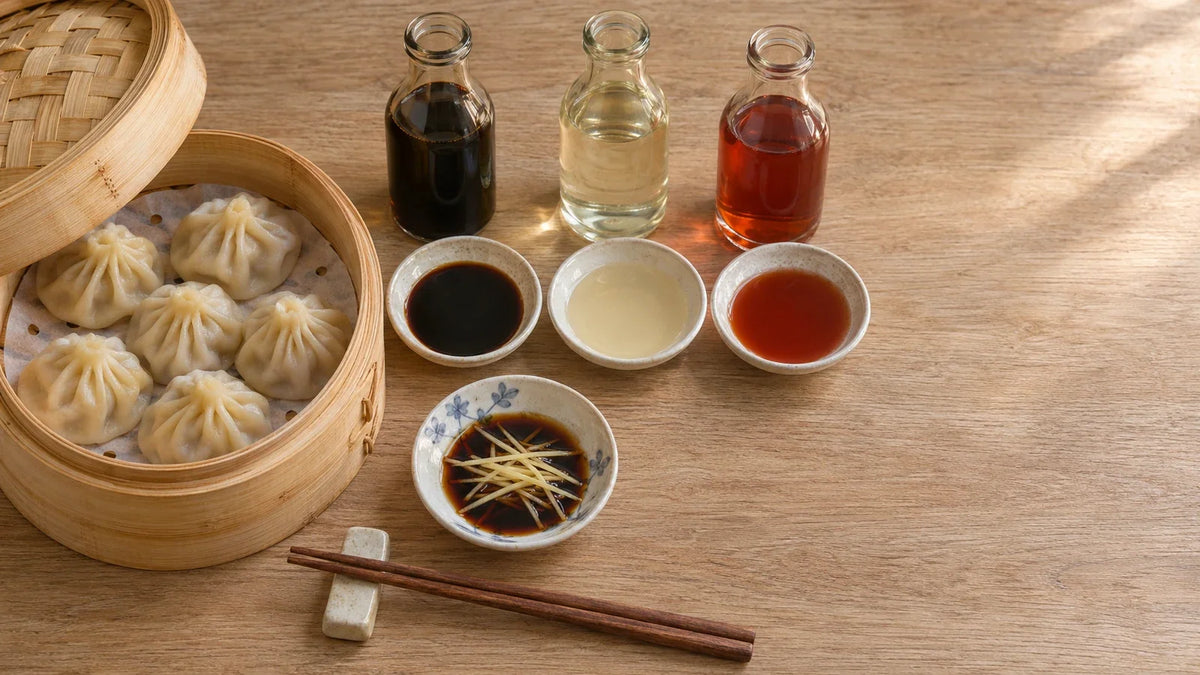
In a Chinese restaurant, a plate of dumplings is almost always served with a small bottle of dark vinegar. For many people, this is their first introduction to Chinese vinegar, and it is also the best: a gentle acidity that cuts through the richness of the filling and makes everything taste lighter. In our shop in Amsterdam, black vinegar has sat among the soy sauce and oyster sauce for ages, because without vinegar, Chinese cuisine is missing one of its five flavors. These are the same bottles you see in supermarkets in China and Hong Kong, from Heng Shun to Pat Chun. In this guide, you will discover the different types of Chinese vinegar, what each one does, and when to use it. It is part of our Chinese cuisine 101, where you will find all the basics.
What is Chinese vinegar?
Chinese vinegar is vinegar brewed from grains such as sticky rice, rice, wheat, or sorghum, rather than from wine or apples like most European vinegars. As a result, it is often milder and rounder in flavor, with a grainy, sometimes slightly sweet depth that you will not find in Western vinegars.
While we mainly use vinegar to add acidity, Chinese cuisine uses it to balance flavors. A splash of vinegar lightens a rich stew and gives soup a fresh edge. The Chinese word for sweet and sour, tang cu, literally means sugar and vinegar.
The different types of Chinese vinegar
The five types of Chinese vinegar you will encounter most often are Chinkiang vinegar, Shanxi aged vinegar, white rice vinegar, red vinegar, and sweet vinegar. Below you will see what we have in stock, and underneath that you can read what each type does.
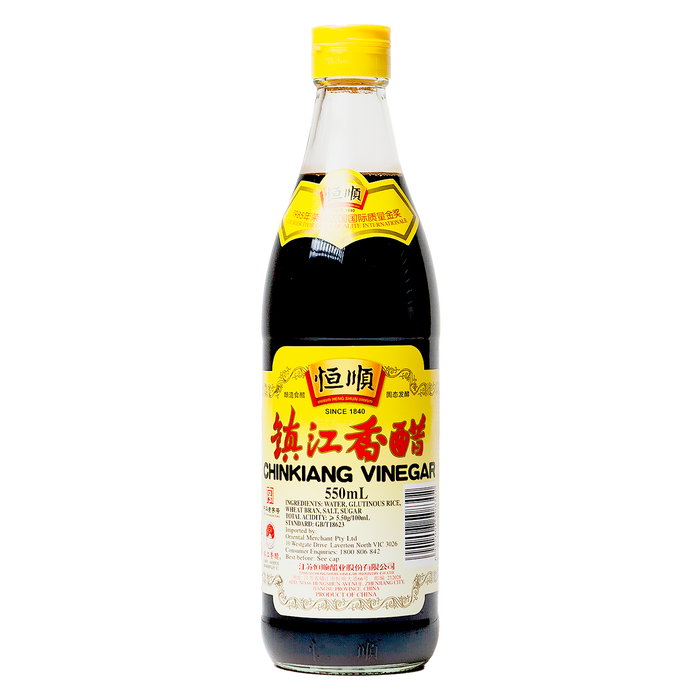
 Chinkiang vinegar 镇江香醋Mildly sour and malty, the all-rounder for dipping sauces, soup, and stews
 Zhenjiang vinegar, aged 6 陈醋Fuller and heavier, for those who want to taste the vinegar itself
Shanxi aged vinegarMade from sorghum, dark and robustly sour, the vinegar of Northern China
 White rice vinegar 白米醋Clear and fresh, for sweet and sour dishes and pickled vegetables
 Red vinegar 红醋Light and fruitily sour, perfect for Cantonese and Hong Kong cuisine
 Sweet vinegar 甜醋Sweet, dark and spicy, for stewing
 Seasoned black vinegar Lee Kum KeeZhenjiang vinegar with sugar and salt, ready to use as a dip
 Dumpling sauce 饺子醋Ready-made dipping sauce from Heng Shun for jiaozi and wontons
Chinkiang vinegar (Zhenjiang vinegar)
Shanxi aged vinegar
Shanxi aged vinegar, in Chinese lao chencu, is the great black vinegar of Northern China and is mainly made from sorghum, with barley and peas in the starter. It is darker and more robustly sour than Chinkiang vinegar, with a deep, almost smoky note. We do not currently stock Shanxi vinegar; in recipes, you can easily replace it with Chinkiang vinegar, which is slightly gentler.
White rice vinegar
Red vinegar
Sweet vinegar
Ready-made vinegar-based dipping sauces
Chinese vinegar or Japanese rice vinegar: what is the difference?
How to cook with Chinese vinegar
The most important thing to know about cooking with Chinese vinegar is that the timing of when you add it makes the difference. Vinegar that cooks for a long time becomes gentler and blends into the sauce, while vinegar that you add only at the end retains its fresh, sharp edge. That is why you only stir the vinegar into suan la tang after the heat is off, and in tang cu xiao pai, you add half the vinegar at the beginning of the stew and the other half only at the end, so that you can taste both sides.
For a simple dipping sauce for dumplings, mix light soy sauce and Chinkiang vinegar roughly half and half, optionally with a few strands of fresh ginger, a little grated garlic, or a spoonful of chili oil, and which chili oil suits you best you can read in Every Lao Gan Ma Explained. For cold dishes, such as smashed cucumber or cold chicken, it works the same way: vinegar, soy sauce, a pinch of sugar and some sesame oil together form the base, and then you make it as spicy or garlicky as you like. You can read more about the right soy sauce in Soy Sauce 101.
In a wok dish, add a small splash of black vinegar along the side of the hot wok just before serving. The vinegar cooks for a moment and leaves a light, fragrant note, as you can taste in yu xiang qie zi.
Recipes with Chinese vinegar
In these five recipes, Chinese vinegar plays a clear role, from a dipping sauce to a glossy sweet and sour sauce.
Also in kou shui ji and hong you chao shou, Chinkiang vinegar provides the fresh counterpoint to the chili oil.
Which Chinese vinegar should you choose?
Not sure? Start with a bottle of Chinkiang vinegar, because you can make most Chinese recipes with vinegar with it, from dipping sauce and sour and spicy soup to sweet and sour stews. If you like cooking sweet and sour with a clear sauce or marinating your own vegetables, keep a bottle of white rice vinegar next to it. Red and sweet vinegars will come naturally later, when you want to explore Cantonese cuisine further. This way you have the same bottle in your pantry that stands next to the stove in Chinese kitchens.
Onze Chinese azijnen
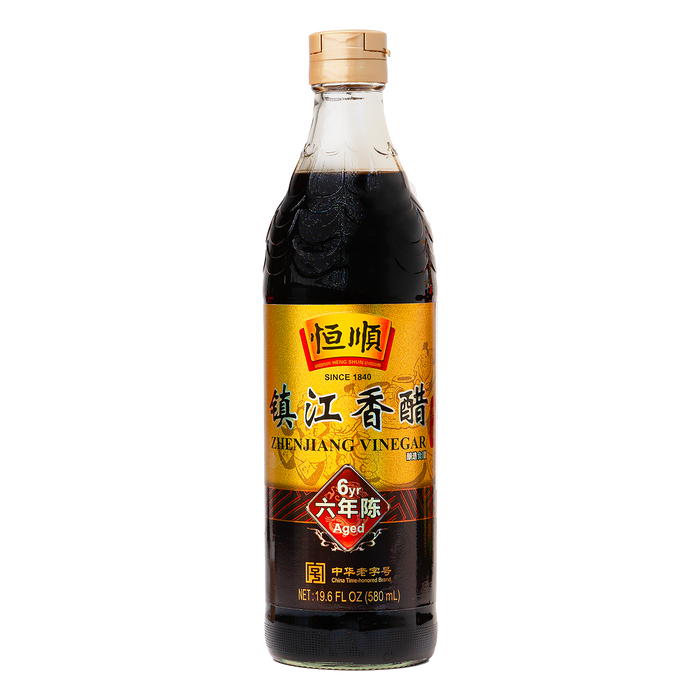
Heng Shun Zhenjiang Vinegar 6 yr Aged
View product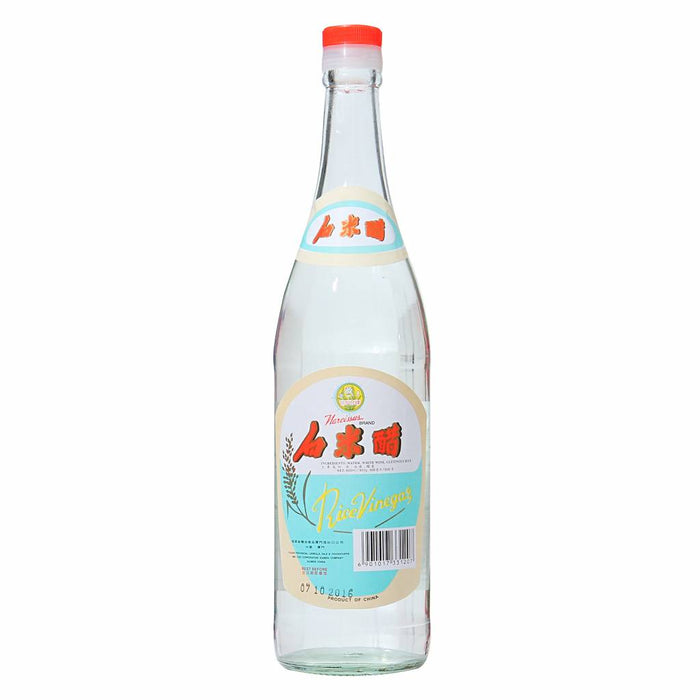
Fu Xing White Rice Vinegar
View product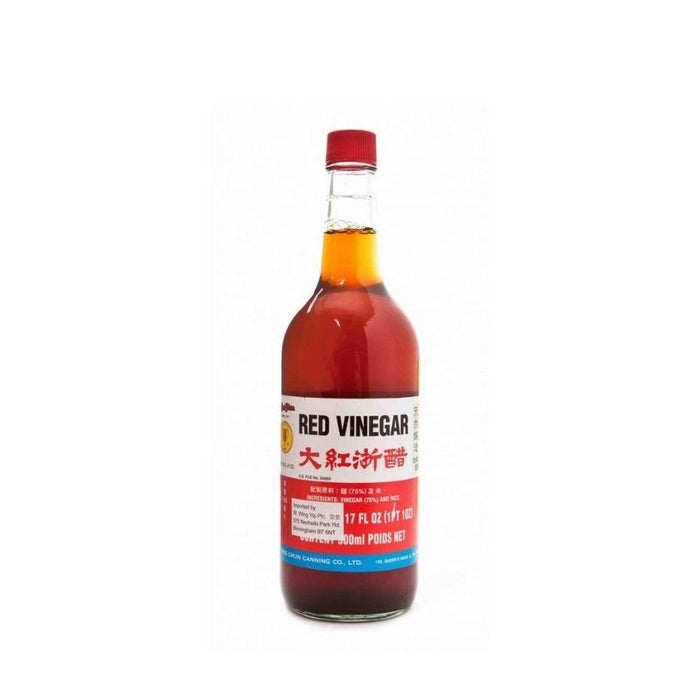
Mee Chun Red Vinegar
View product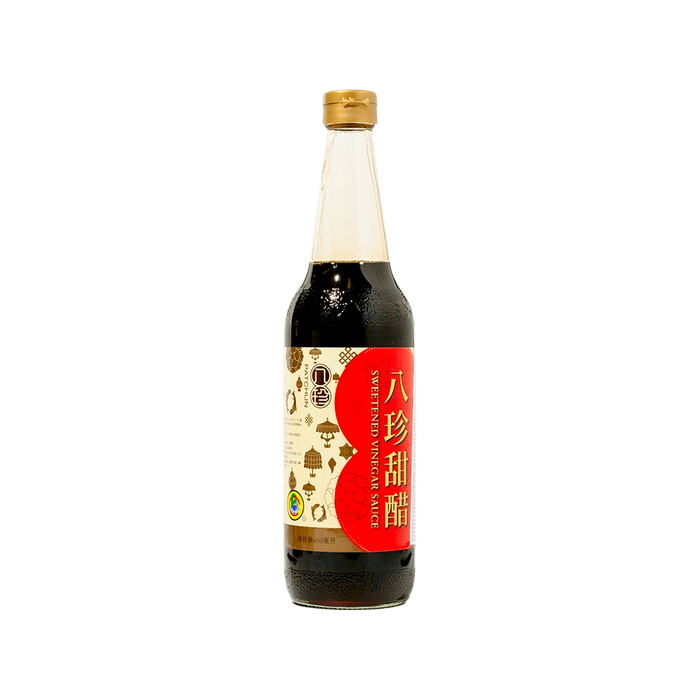
Patchun Sweetened Vinegar Sauce
View product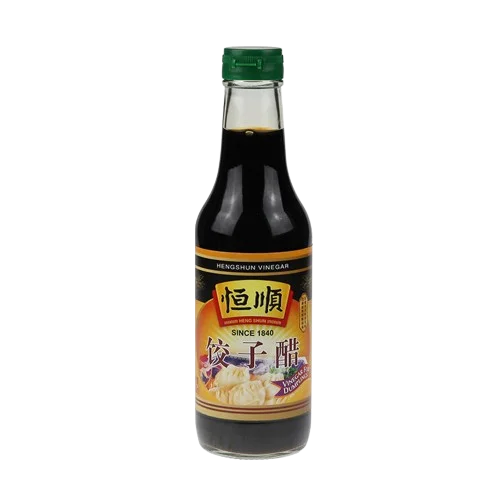
Heng Shun Dumpling Sauce
View productBrewed vinegar can usually stay in a cool, dark cupboard after opening, but always check the label, because some flavored vinegars, such as Lee Kum Kee's seasoned rice vinegar, state that you should keep them refrigerated after opening. You can find all the vinegars together in our vinegar collection, and the rest of the Chinese pantry in Chinese sauces and flavorings and on our China page.
Frequently asked questions
What is the difference between Chinkiang vinegar and Zhenjiang vinegar?
There is no difference: Chinkiang is the old spelling of the city Zhenjiang, and both names refer to the same black sticky rice vinegar.
What can you substitute Chinese black vinegar with?
There is no real substitute, but in a pinch, a mild balsamic vinegar with a little rice vinegar mixed in comes close.
Can you use black and white rice vinegar interchangeably?
Better not. White rice vinegar is sharper and colorless, black vinegar is milder and adds color and depth, so the dish will taste and look different if you swap them.
Does Chinese vinegar contain gluten?
Chinkiang vinegar is made with wheat flour and therefore contains gluten. Check the label on every bottle for allergen information.
Is sweet vinegar the same as sweet and sour sauce?
No, sweet vinegar is a sweetened rice vinegar for braising, while sweet and sour sauce is a ready-made sauce with tomato or fruit, among other things. They are not interchangeable.
What do you use Chinkiang vinegar for?
You mainly use Chinkiang vinegar as a dipping sauce for dumplings, with some fresh ginger, and in sour and spicy soup, cold dishes and sweet and sour stews.
How do you store Chinese vinegar?
Store vinegar tightly sealed in a cool, dark place. Follow the advice on the label for shelf life after opening.
Chinese vinegar is one of those bottles you might only buy for dumplings at first, but then you find yourself taking out of the cupboard more and more often, for a soup that could use a little more freshness, a stew that feels too heavy or a small bowl of cucumber on a warm evening. Feel free to start with one bottle, taste how it transforms a dish and then slowly explore the other varieties. And if you are not sure which bottle to get, come in and see us in Amsterdam or ask your question, because we are happy to help you, and in Chinese cuisine 101 you can read how vinegar finds its place in Chinese cuisine together with the other basic ingredients.

