


Cornstarch in Chinese cuisine: thickening, marinating and frying
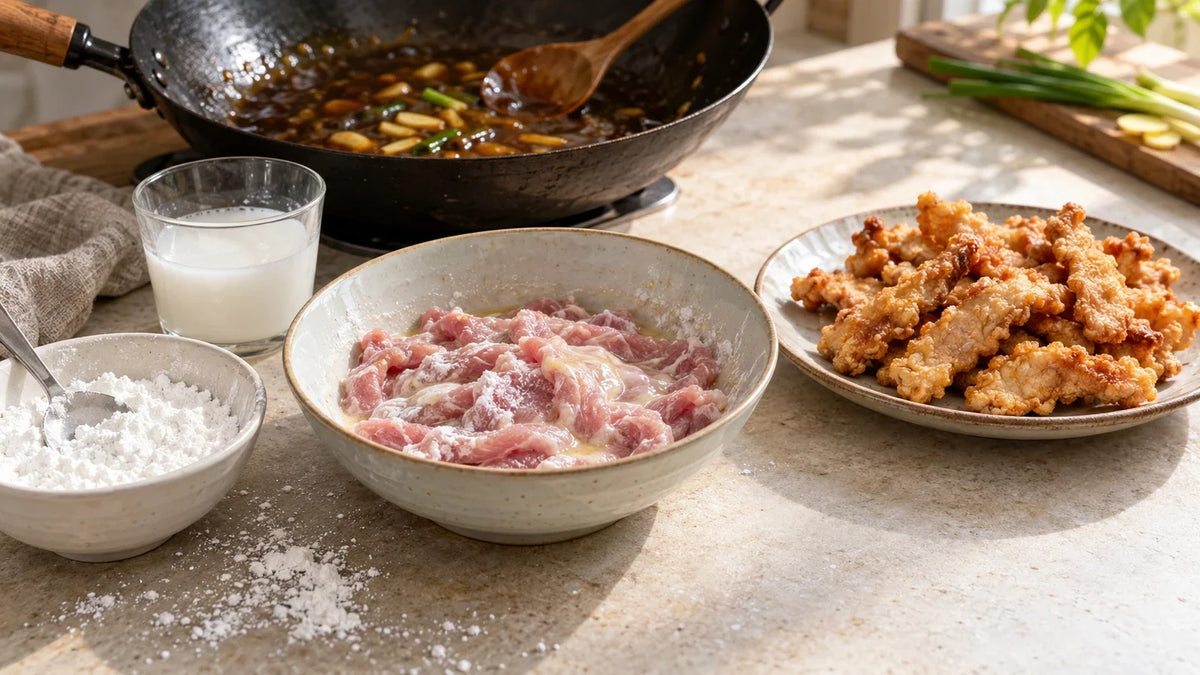
There is hardly a Chinese dish that doesn't contain a spoonful of starch somewhere. It is the ingredient you see and taste the least, but it determines whether the sauce coats your vegetables with a glossy sheen, whether your beef strips stay tender in the hot wok, and whether the crust on your sweet and sour pork remains crispy when it hits the table. That is why many Chinese kitchens keep a bag of cornstarch within easy reach of the stove. We stock the same bags you will see in supermarkets across Asia. In this article, you will learn how to use cornstarch in three ways: to thicken sauces, to tenderise meat, and for frying, and when it is better to opt for tapioca starch or rice flour. It is part of our comprehensive guide Chinese Cooking 101, in which cornstarch is one of the ten basic ingredients.
What is cornstarch and why is it used so much in Chinese cooking?
Cornstarch is pure starch from corn: a fine, white powder with no flavour of its own that thickens as soon as it is heated with liquid. Precisely because it is neutral, it lets the flavours of soy sauce, ginger, garlic and oyster sauce shine through, which is what makes it so versatile in Chinese cooking. In Chinese, it is called 玉米淀粉 (yùmǐ diànfěn), but recipes often simply say 淀粉, starch, because cooks regularly substitute one starch for another.
Compared with wheat flour, cornstarch creates a clearer and lighter thickening. A sauce made with flour becomes cloudy and needs to be cooked for several minutes to avoid tasting floury, while a sauce made with cornstarch becomes translucent and glossy within half a minute. This is ideal for a cuisine where everything is cooked over high heat in just a few minutes. Chinese cooking has its own words for each of the three applications, which you will discover below.
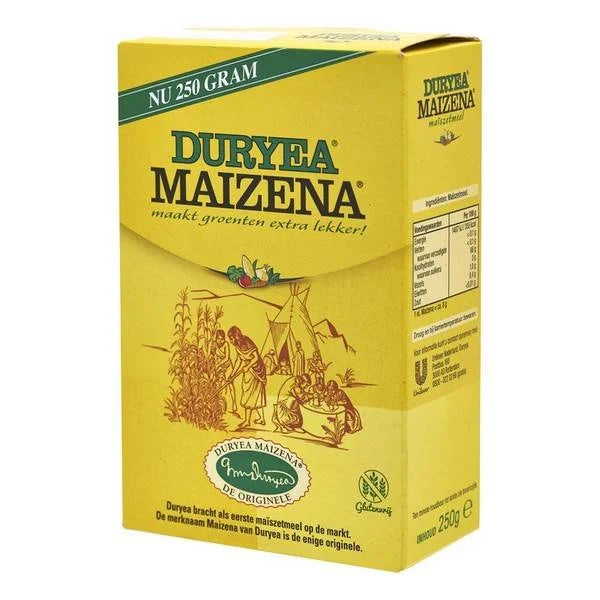
 Cornstarch 玉米淀粉The all-rounder: thickening, marinating and frying
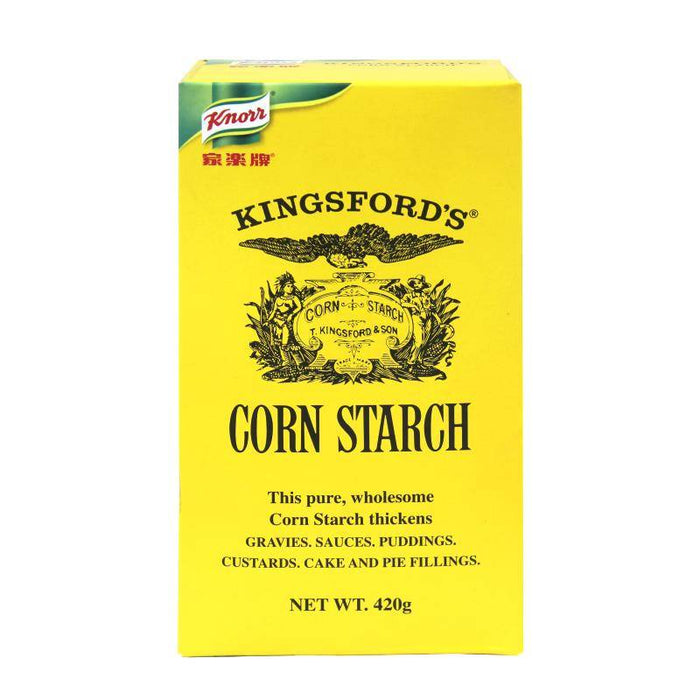
 Cornstarch Kingsford'sAlso cornstarch, in a larger package
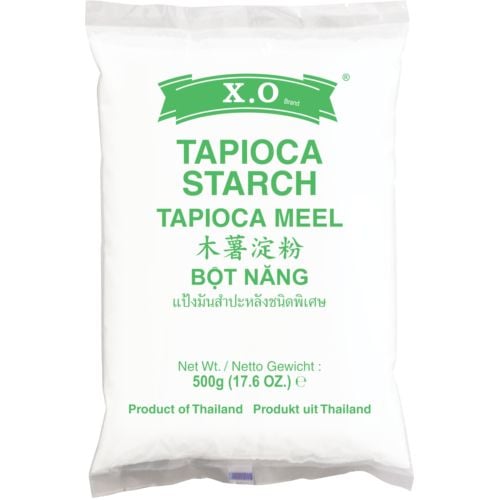
 Tapioca starch 木薯淀粉A glossier coating, slightly more elastic as a thickener
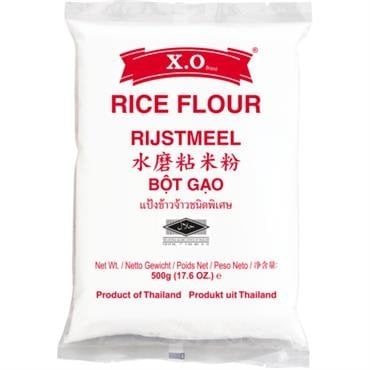
 Rice flour 粘米粉Ground rice, for batter and steamed rice sheets
Thickening a sauce with a slurry
To thicken a Chinese sauce, stir a slurry of cornstarch and cold water into the boiling sauce at the end; within half a minute, it becomes glossy and coats the meat and vegetables. Chinese cooks call this 勾芡 (gōuqiàn), and it is the reason a wok dish does not end up on your plate in a pool of thin sauce.
Always mix the starch with cold water first, about one part cornstarch to two parts water, because if you sprinkle the powder directly into a hot sauce, it will immediately form lumps. The starch quickly settles to the bottom of the bowl, so stir the slurry well again just before pouring it into the wok. Pour it in while stirring, in a thin stream or in two additions, so you can stop as soon as the sauce has reached the right thickness, and then let the sauce simmer gently for a while longer, because cornstarch only truly thickens and becomes clear when it has come to a boil. Often it is even easier: in many recipes, such as beef in oyster sauce, you mix the starch into the soy sauce, oyster sauce and sugar beforehand, so you can add the sauce and thickener in one go.
A lightly thickened soup works the same way. In suan la tang, you first stir the slurry through and only then add the beaten egg, so that it remains suspended in soft, silky strands instead of sinking to the bottom. It is better to use too little than too much, because a sauce with too much cornstarch becomes sticky, and that is much harder to fix than a sauce that is just a little too thin.
Tenderising meat by marinating it with starch
Meat stays tender and juicy in the hot wok if you marinate it for fifteen minutes beforehand with a little cornstarch, soy sauce, Shaoxing wine and a splash of water. This technique is called 上浆 (shàngjiāng), literally applying a layer, and in English you will encounter it as velveting.
The starch forms a thin layer around each piece of meat, which quickly sets in the hot pan and retains the moisture in the meat, making it feel more tender and smooth than if you were to fry it without treatment. A rule of thumb from our recipes is one teaspoon of cornstarch per about 250 grams of meat, along with one tablespoon of light soy sauce, one tablespoon of Shaoxing wine and one tablespoon of water, which you massage well into the meat until it is absorbed. Restaurants often add some egg white and sear the meat briefly in hot oil or water before it goes into the wok, but at home you are already a long way there with just the marinade.
It works best with lean cuts that dry out quickly. For beef, cut a bavette or a piece of sirloin into thin strips against the grain, as in beef chow fun, use chicken thigh fillet or diced chicken breast for chicken, as in gong bao ji ding, and for pork, use pork shoulder or fillet. If you want to know why Shaoxing wine is so often in this marinade, read more in our article about Shaoxing wine.
Crispy coatings when frying
Starch gives fried meat a lighter and crispier coating than wheat flour, because it contains no gluten that forms a tough, bread-like layer. Chinese cooking has two ways of doing this: a dry layer of starch around the meat, or a thick batter of starch and water, which is called 挂糊 (guàhú).
For gu lou yuk, Cantonese sweet and sour pork, marinate your cubes of pork shoulder or fillet, dip them in beaten egg and then in starch until they feel dry. In North Chinese guo bao rou, thin slices of pork shoulder are instead dipped in a thick batter of tapioca starch and water, which produces a coating that becomes almost glassy. In both recipes you fry twice: first at a lower temperature until the meat is cooked, and then very briefly at a high heat, so that the coating gets its colour and crispiness and retains it when the sauce is added.
A few things help with this. Leave the floured meat for a few minutes before it goes into the oil, so that the starch absorbs moisture and does not come off in the pan. Fry in small batches, because too much meat at once cools the oil and the coating becomes greasy instead of crispy. And only toss the meat through the sauce at the last moment, just before serving.
Cornstarch, tapioca starch or rice flour: what is the difference?
Cornstarch is the best all-rounder for most Chinese dishes, but tapioca starch, potato starch and rice flour each have their own character. In practice, you can often use them interchangeably, although the result differs slightly.
-
 Cornstarch thickens clearly and firmly, and is suitable for all three applications. We offer Duryea Cornstarch and Knorr Kingsford's Cornstarch.
-
 Tapioca starch comes from cassava root. It thickens before the sauce boils and gives a slightly more elastic, glossy sauce, and when frying, a glassy, crispy coating that stays crispy longer. Try X.O. Tapioca Starch in guo bao rou.
- Potato starch thickens strongly and gives a very light, crispy coating. In Japan it is called katakuriko and is the classic choice for karaage. We do not have it in our range at the moment, but tapioca starch comes closest in terms of coating.
-
 Rice flour is not a pure starch but ground rice. It thickens less strongly and is mainly used in batter and for steamed rice sheets, such as in cheung fun, where it works with tapioca starch to create the soft, smooth sheets. We offer it as X.O. Rice Flour. Note: glutinous rice flour is different, it becomes chewy and elastic and is intended for sweet balls and mochi.
Not sure? Start with cornstarch. Use it to thicken your sauces, marinate your meat, and fry your first sweet and sour pork, and only when you find you want an even glossier coating do you put a bag of tapioca starch next to it.
Zetmeel voor de Chinese keuken
Store starch properly sealed in a cool, dry place and follow the instructions on the label. You will find more basic ingredients in the Chinese Cooking Ingredients collection and on our China page, and for the sauces you thicken with cornstarch, read on in Soy Sauce 101 and Oyster Sauce 101.
Recipes with cornstarch
These five recipes show all three applications together, from a quickly thickened wok dish to a double-fried classic.


Frequently asked questions
Is cornstarch the same as cornmeal?
No. Cornstarch is pure starch from corn, while cornmeal is the whole ground corn kernel, with a yellow color and its own flavor. You use cornmeal for polenta or tortillas, but not to thicken a Chinese sauce.
How much cornstarch do you need to thicken a sauce?
For a wok dish for two people, one teaspoon of cornstarch, dissolved in two teaspoons of cold water, is usually enough. Add it in parts, so you can stop as soon as the sauce has the right thickness.
Why does my thickened sauce become thin again?
This usually happens if the sauce continues to boil for a long time or is stirred vigorously after it has been thickened, or if it contains a lot of vinegar. Therefore, thicken the sauce at the end, let it boil briefly and serve the dish immediately after.
Can you use cornstarch and tapioca starch interchangeably?
Yes, when thickening, marinating and frying, you can substitute one for the other. Tapioca starch gives a slightly more elastic sauce and a glossier crust, while cornstarch gives a firmer, clearer thickening.
Why do you marinate meat with cornstarch?
The starch forms a thin layer around the meat that retains moisture. This keeps the meat tender and juicy in the hot wok, and helps the sauce cling to it better later.
Can you replace cornstarch with flour?
It can be used to thicken a sauce, but you need more flour, the sauce must boil longer and it becomes cloudy instead of glossy. That is why starch works better for Chinese dishes.
Does cornstarch contain gluten?
Cornstarch is naturally gluten-free. However, if you are on a gluten-free diet, always check the label of the package you use.
Starch may be the least noticeable package in your kitchen cupboard, but it is the ingredient that makes your wok dishes shine and your meat stay as tender at home as you are used to from the Chinese restaurant around the corner. Feel free to start with a simple wok where you marinate the meat and thicken the sauce at the end, because after a few times it becomes second nature and you won't want to do it any other way. And if you have questions about which starch is right for your dish, feel free to visit us in Amsterdam, or read on in our guide Chinese cuisine 101 for the rest of your Chinese pantry.

