


Kimchi 101: Types, Fermentation, Cooking and Making It Yourself
In almost every Korean refrigerator there is a jar of kimchi, and at almost every Korean meal there is a small dish of it on the table. Kimchi is a side dish, flavour enhancer and leftover saver all at once: young and fresh next to a bowl of white rice, sour and deep in flavour in a bubbling stew on a cold evening. Once you get used to it, you will immediately miss it with a plate of fried rice. Here you can read what kimchi is, what types there are, why that old, sour jar is just the tastiest to cook with and how you can make it yourself or choose it, online or at our toko in Amsterdam. For the rest of the Korean pantry, start with Korean Kitchen 101.
What is kimchi?
In the past, Korean families made all the kimchi for the whole winter at once at the end of autumn, with neighbours and family together working on long rows of cabbage. That tradition is called kimjang and is on the UNESCO list of intangible cultural heritage. The red colour is by the way younger than you would think: Koreans made vegetables for a long time before the chili pepper arrived in Korea, so the oldest kimchi was not red.
What types of kimchi are there?
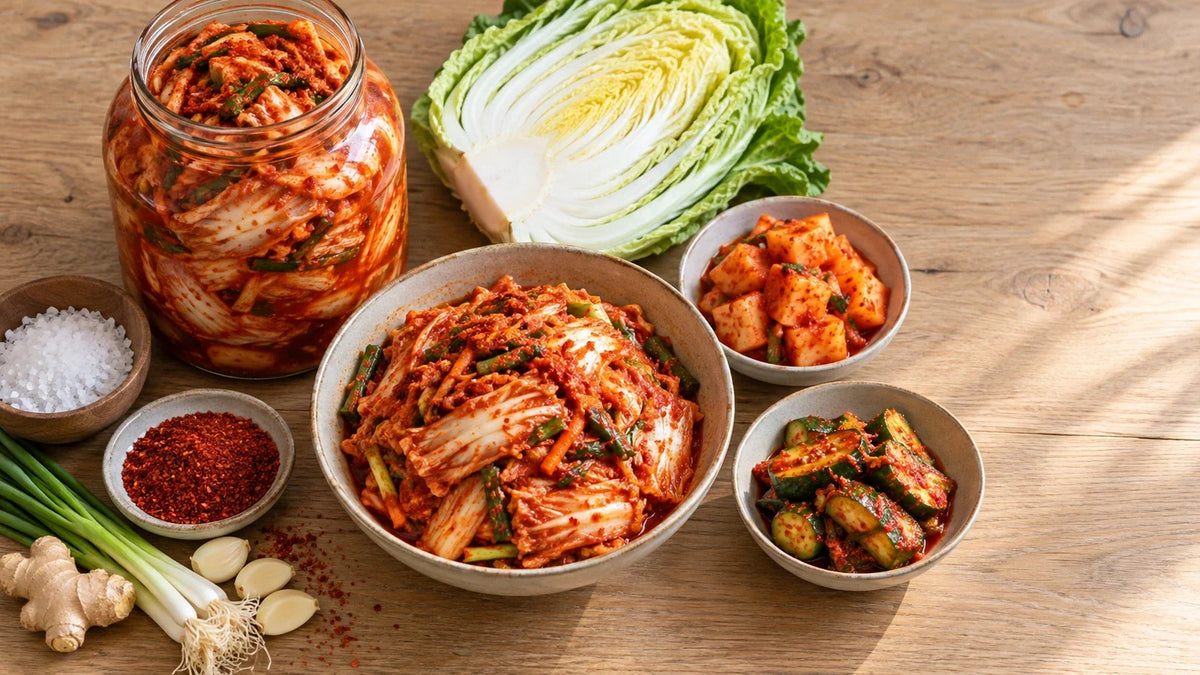
There are many types of kimchi, classified by the vegetable and by the season, and these seven you will come across most often. Not every kimchi is red or spicy: a few are mild and float in a clear broth.
Baechu-kimchi 배추김치 · Chinese cabbageThe classic, in whole quarters or already cut into pieces
Kkakdugi 깍두기 · radishCrunchy radish cubes, often next to a bowl of soup
Oi sobagi 오이소박이 · cucumberSliced cucumber filled with spices, best fresh
Pa-kimchi 파김치 · scallionWhole spring onions in a spicy sauce, firm in flavour
Nabak kimchi 나박김치 · water kimchiThin slices of radish and cabbage in a light red broth that you drink along
Dongchimi 동치미 · radish in brineClear winter variety, the broth also goes over cold noodles
Baek-kimchi 백김치 · white kimchiWithout chili powder, mild and fresh
Young or sour kimchi: what is the difference?
Young kimchi is fresh, crunchy and sharp, and sour kimchi has ripened longer and tastes more sour, softer and deeper. Kimchi slowly ripens in the refrigerator, so the same jar tastes different after a few weeks than on the day you opened it. Freshly seasoned cabbage that has barely fermented yet is called geotjeori, and kimchi that has ripened for months is called mugeunji.
For cooking, sour kimchi is actually the best. In a kimchi jjigae or kimchi bokkeumbap, the kimchi cooks or fries for a while, and then only well-ripened kimchi has enough sourness and flavour left to stand up to the fat of pork belly and the softness of rice. Young kimchi quickly becomes flat and a bit watery in the pan. So you better eat it cold next to your food, and put the rest of the jar at the back of the refrigerator for later. Do not throw away the liquid from the jar either, because a few spoons of it will immediately give your stew more colour and kick.
What can you cook with kimchi?
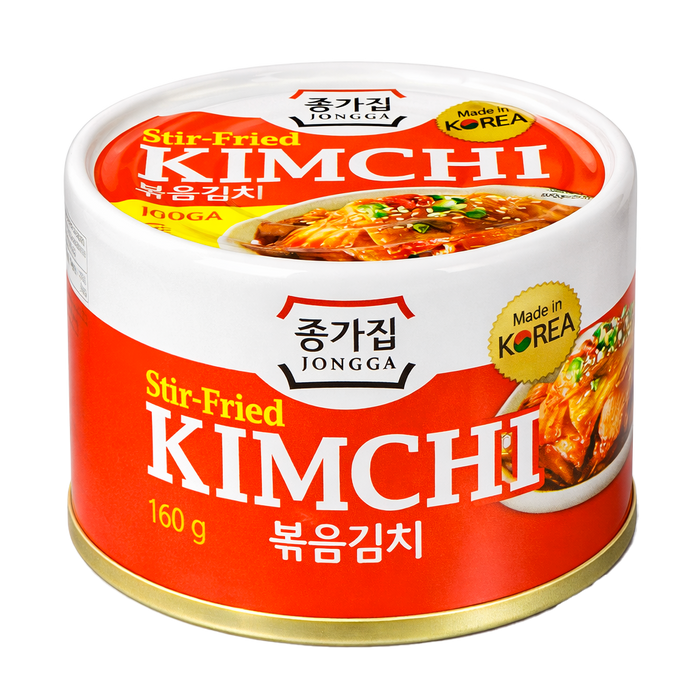
Jongga Stir Fried Kimchi is kimchi that has already been in the pan, soft and immediately ready to eat with rice, but with regular kimchi you can go in many more directions yourself. These are the dishes where kimchi ends up most often in Korea:
- Kimchi jjigae: stew of sour kimchi with pork belly or corned beef, tofu and a dash of kimchi juice.
-
 Kimchi bokkeumbap: fried rice from the day before with finely cut kimchi, some pork belly or luncheon meat and a fried egg on top.
-
 Dubu kimchi: kimchi fried with thin slices of pork belly, with slices of warm tofu next to it like Morinaga Tofu Extra Firm.
-
 Kimchijeon: crispy pancake with kimchi through the batter, easy with Chung Jung One Korean Crispy Pancake Mix.
- On the grill: with samgyeopsal you fry kimchi along in the fat of the pork belly, so tasty that it is a dish on its own.
- In ramyeon: a generous scoop of kimchi in a bowl of instant noodles, more about that in Instant noodles.
Koken met kimchi
Jongga Mat Kimchi
View product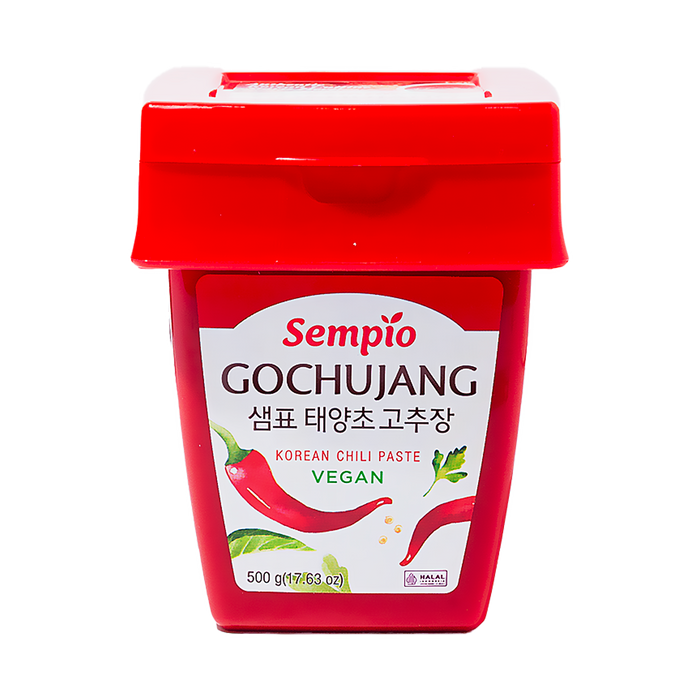
Sempio Gochujang Hot Pepper Paste
View product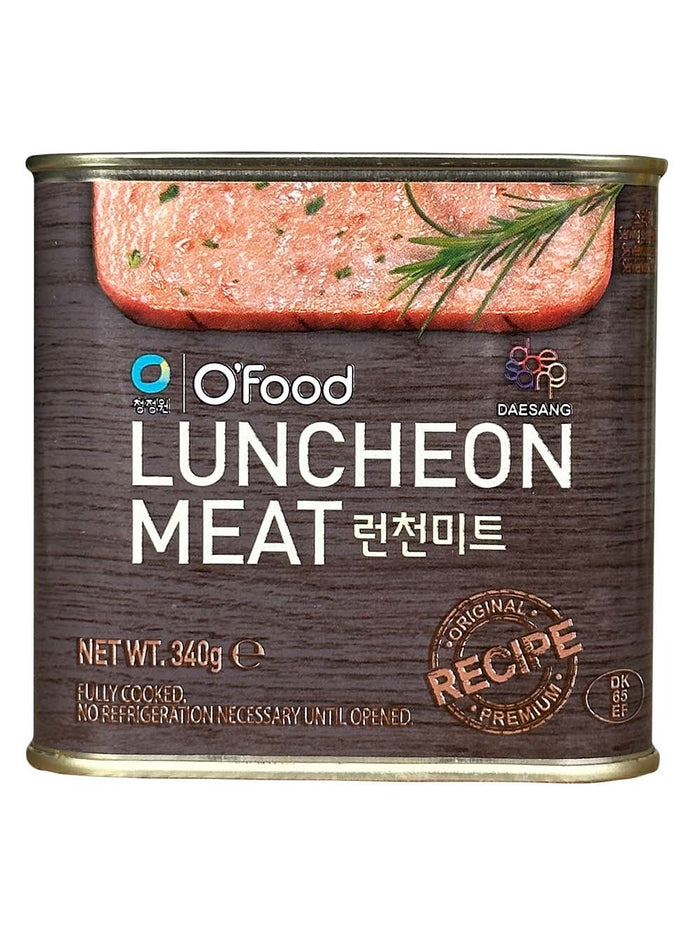
O'food Luncheon Meat
View product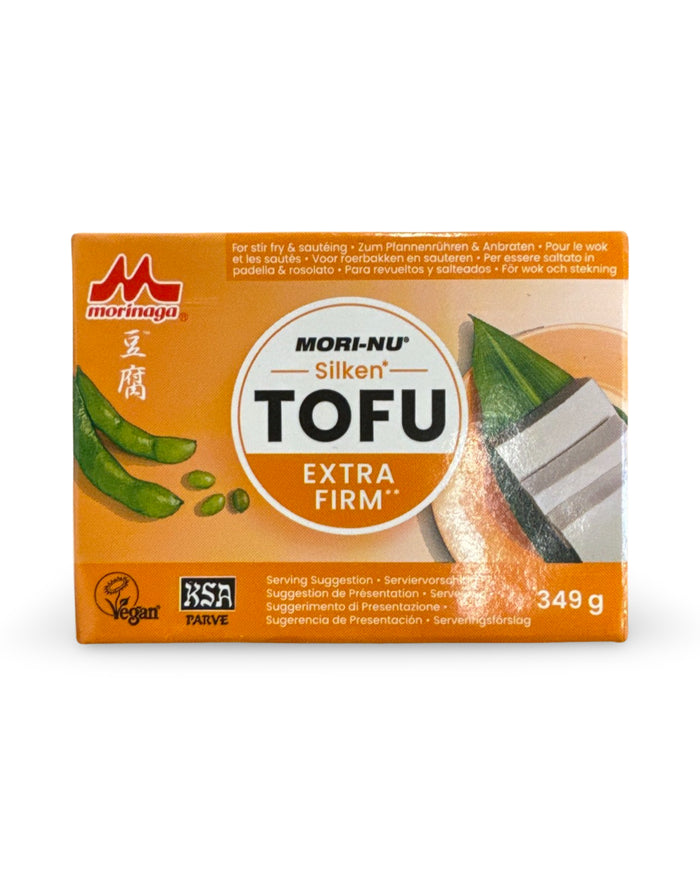
Morinaga Tofu Extra Firm
View product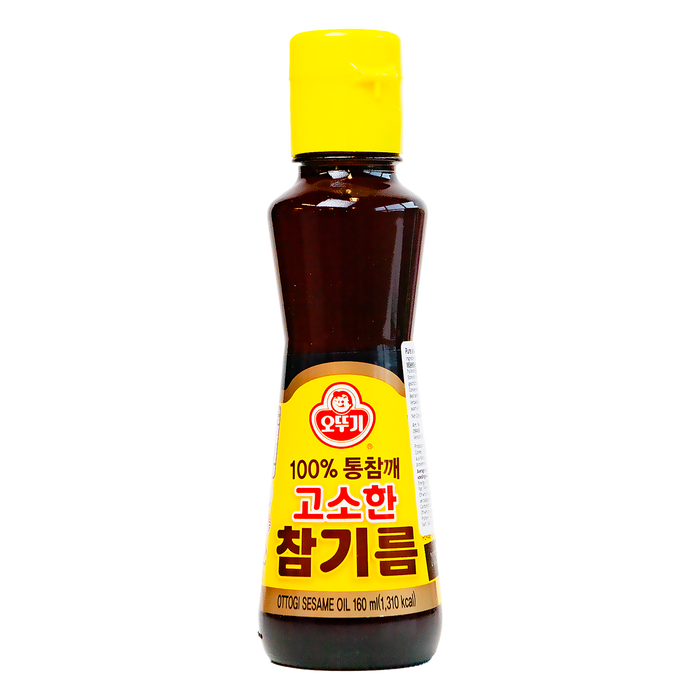
Ottogi Sesame Oil
View product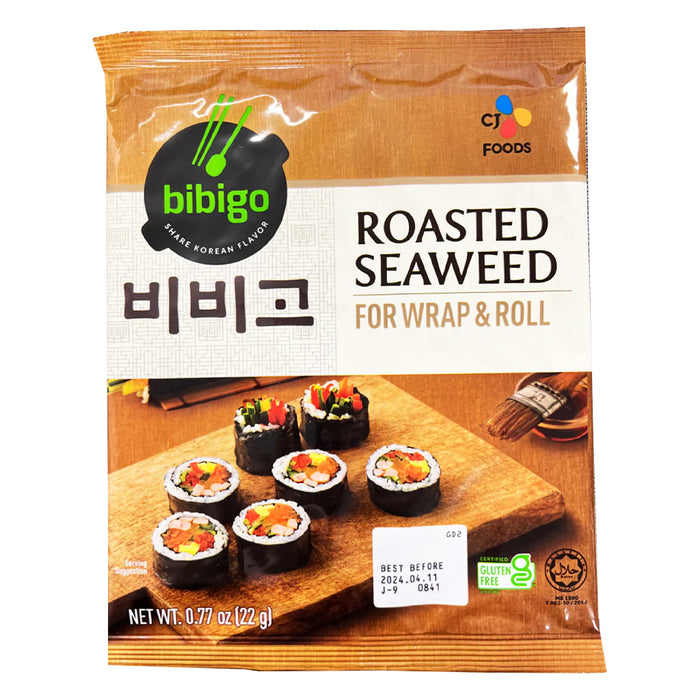
CJ Bibigo Roasted Seaweed Gimbap
View product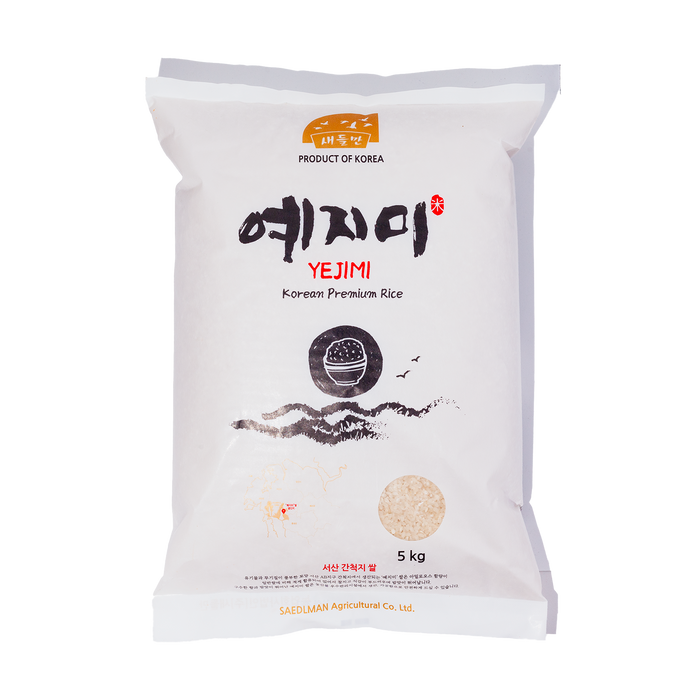
Yejimi Premium Koreaanse Rijst
View productRecipes with kimchi
With these recipes you put kimchi on the table as a main role or as a regular side role.


If you still have a leftover kimchi, some luncheon meat and a package of ramyeon, make budae jjigae, the spicy stew in which all that goes together in one pan.
What kimchi can you buy?
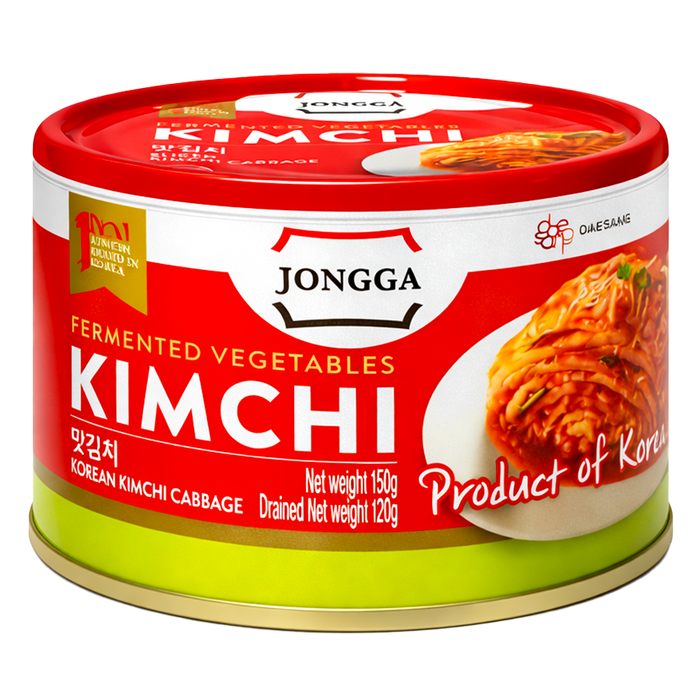
Jongga Mat Kimchi is baechu-kimchi that is already cut into bite-sized pieces, in a small format that you finish in one or two meals. Ready-made kimchi is handy for on the side, and if you want to season vegetables yourself, there are kimchi sauces and spice mixes where the flavour is already in it. A package of Jongga is the same that Korean families simply take from the supermarket in Seoul, and the coarse gochugaru of Nongshim is the chili powder that is in the cabinet at home for the kimjang.
 HoSan Kimchi Vegetables ready-made · 160 gCabbage with chili, garlic and ginger, shelf-stable in the cabinet
 Obap Kimchi ready-made · 200 gReady to put next to your rice
 Kimchi Base Sauce kimchi base · 453 gSpicy base to stir through vegetables or fried rice
 Kikkoman Kimchi Sauce kimchi sauce · 300 gFor quickly seasoned cabbage, cucumber or radish
 All Groo Gangnam Kimchi Seasoning kimchi sauce · 260 mlKorean seasoning sauce to make kimchi yourself with
How do you make kimchi yourself?

 Gochugaru, coarse 고춧가루 · Nongshim 454 gColour and a mild, fruity kick
 Anchovy sauce instead of aekjeotSalty depth in the paste
 Bagoong alamang instead of saeujeotSalted shrimp, finely chopped through the paste
 Glutinous rice flour for the rice porridgeLet the spices stick to the leaves
 Lobo Kimchi Marinade seasoning mix · 100 gThe shorter way, with the spices already mixed
Cut the cabbage into four lengthwise pieces, sprinkle coarse sea salt between the leaves, especially on the thick stems, and let it stand for a few hours until you can bend a stem without it breaking; turn the quarters over once in between, then rinse them thoroughly a few times in cold water and let them drain well. Meanwhile, cook one tablespoon of glutinous rice flour with a glass of water over low heat until it becomes a thin, shiny porridge and let it cool completely, because this porridge helps the spices stick to the leaves.
Stir the cold porridge with gochugaru, grated garlic and ginger, a dash of anchovy sauce, some finely chopped salted shrimp (in Korea saeujeot, we use bagoong alamang) and a pinch of sugar, and fold in strips of radish and pieces of spring onion. Put on gloves, rub the paste between every leaf, fold the quarters in half and press them firmly into a clean jar, leaving some room at the top. Let the jar stand at room temperature for a day or two until you see small bubbles and the kimchi smells slightly sour, and then put it in the refrigerator, where it will continue to ripen slowly. If you eat vegetarian, leave out the anchovy sauce and shrimp and add some extra salt or a dash of Yondu Vegetable Umami to the paste.
Not sure if you dare tackle a whole cabbage right away? Then start with half a cabbage and a bag of Lobo Kimchi Marinade, where the spices are already in it, so you can first experience how salting and rubbing goes before you mix your own paste next time.
Zelf kimchi maken
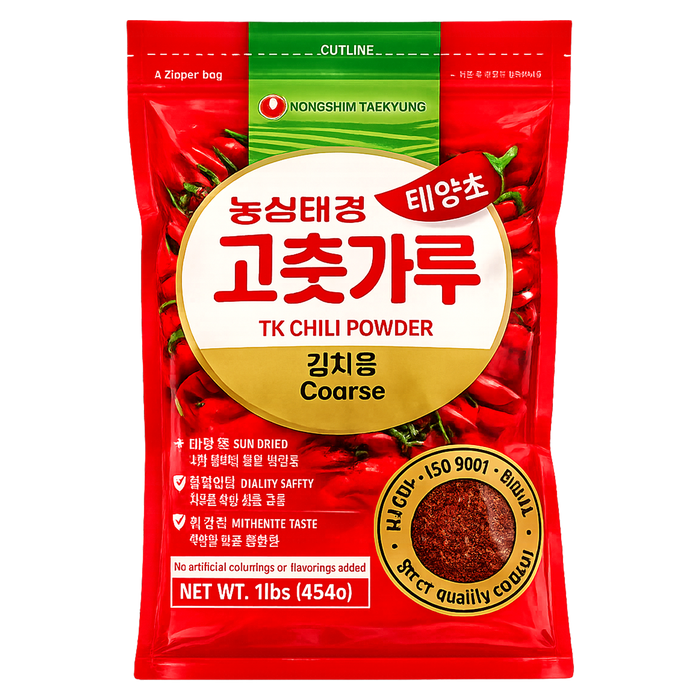
Nongshim Red Pepper Powder (coarse)
View product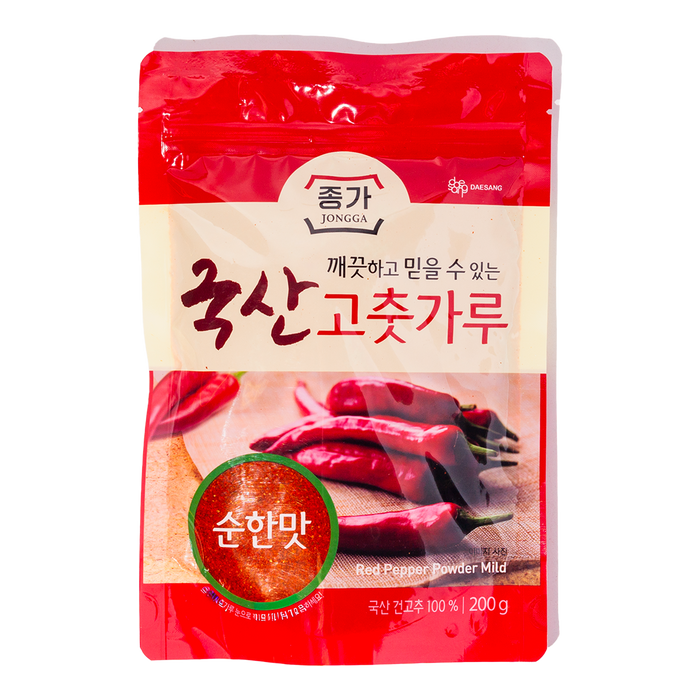
Jongga Red Pepper Powder Coarse (Mild)
View product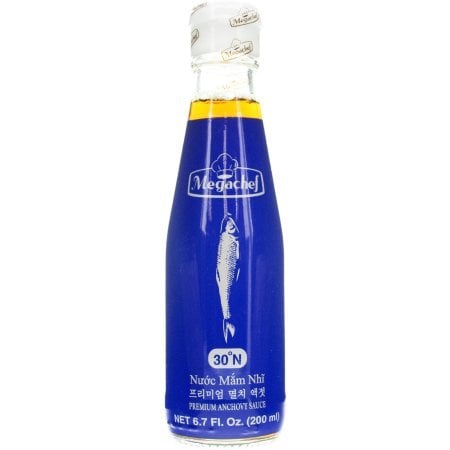
Megachef Premium Anchovy Sauce
View product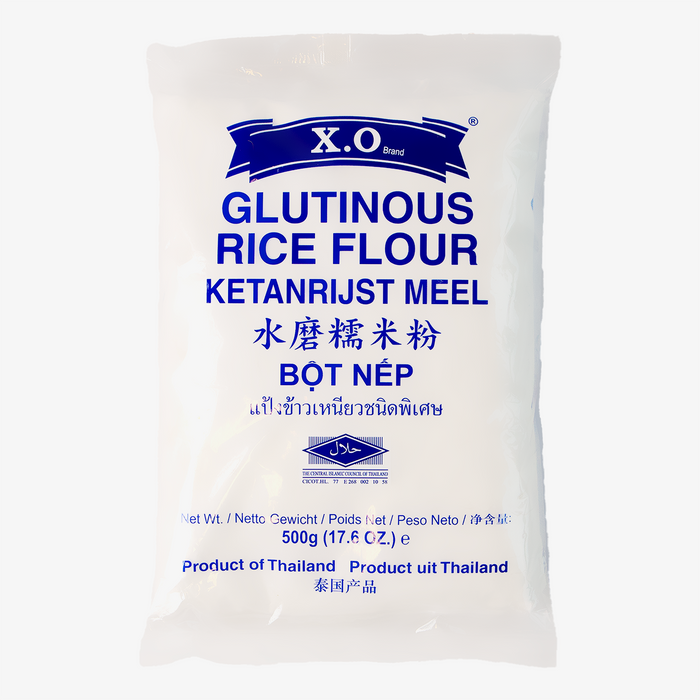
XO Glutinous Rice Flour
View product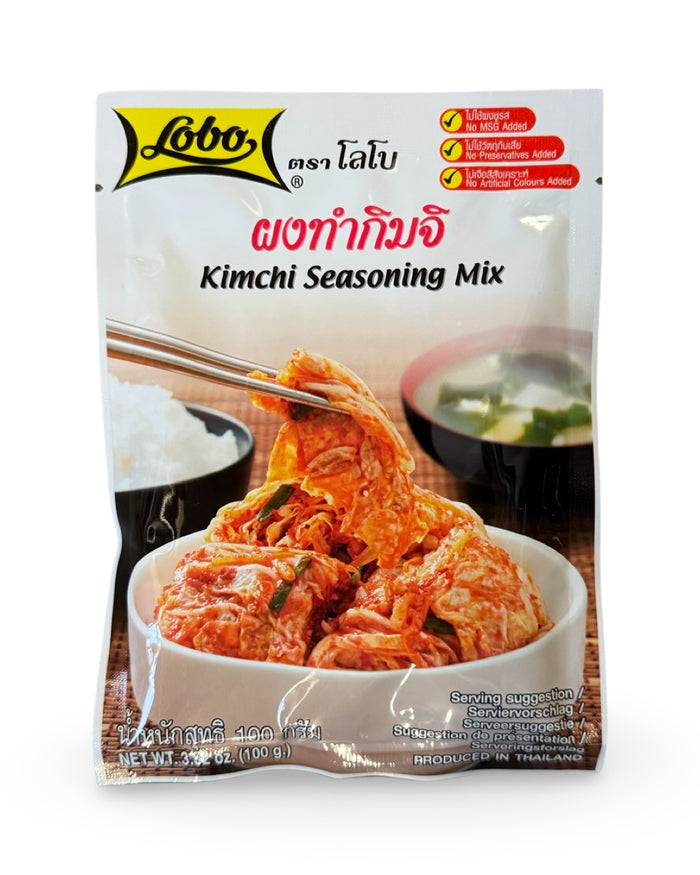
Lobo Kimchi Marinade
View product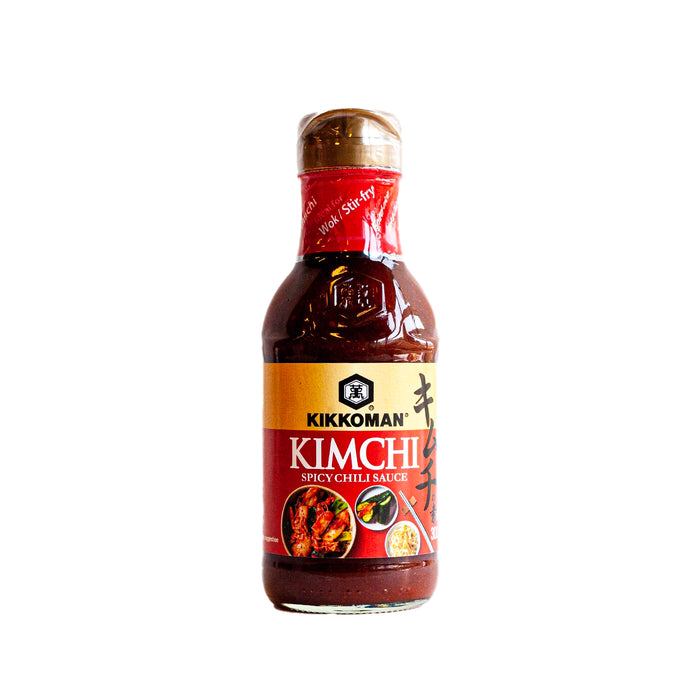
Kikkoman Kimchi Sauce
View product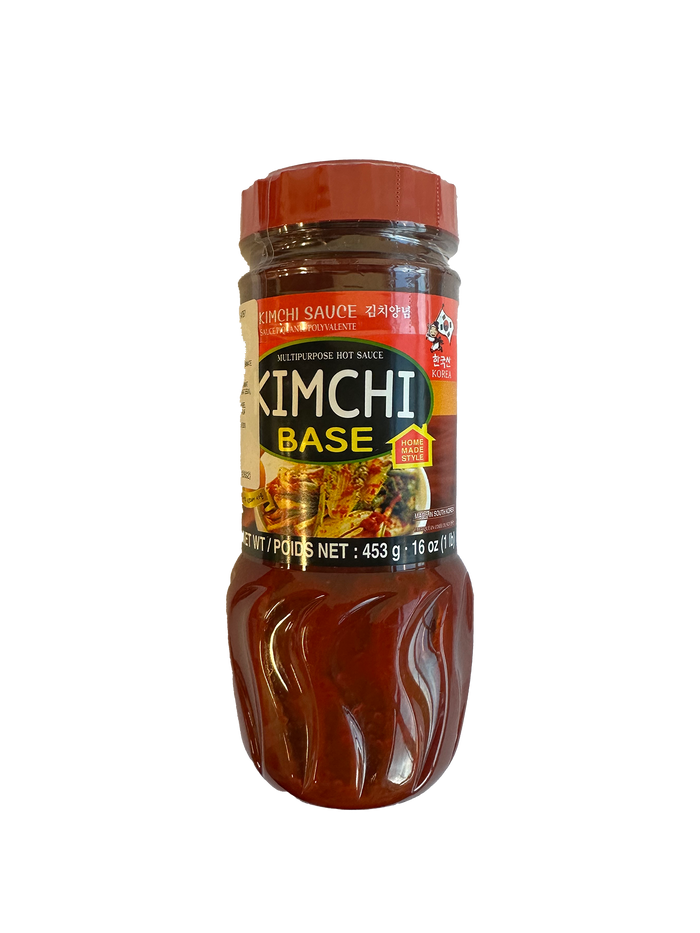
Kimchi Base Sauce
View product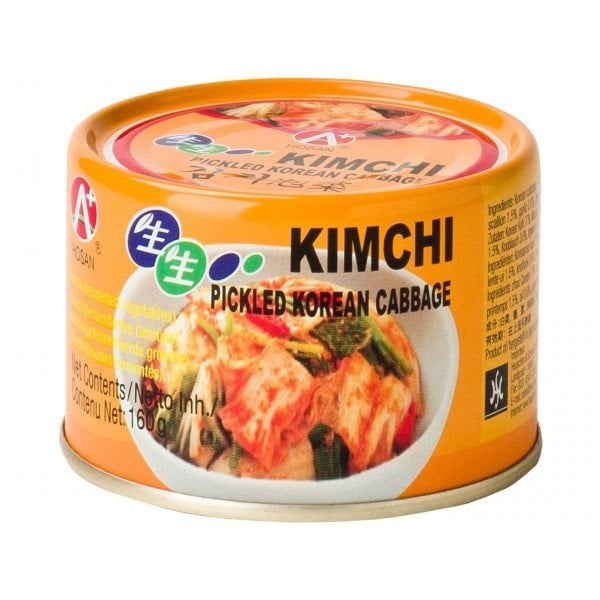
HoSan Kimchi Vegetables
View productHow do you store kimchi?
Store kimchi well sealed in the refrigerator, and for store-bought kimchi follow the label, because shelf-stable kimchi in a can or bag may often be kept in the cupboard until opened. Press the vegetables down under the moisture again after every scoop and pick it up with a clean spoon, so the rest of the jar stays nice. Kimchi continues to gas while it ripens, so do not fill a jar to the brim and open the lid carefully over the counter. Becoming more sour is not spoilage but simply ripening, and it is precisely that sour jar you use for jjigae; see or smell something you do not trust, such as mold, then throw it away. Against the smell in your refrigerator helps a glass jar or container with a well-closing lid.
Everything you need besides kimchi is in these Korean categories:
Kimchi 김치Ready-made, sauces and seasoning mixesShop now Spices & mixes 양념Gochugaru, broth and cooking baseShop now
 Sauces & jang 장Gochujang, doenjang and ssamjangShop now
 Rice cakes 떡 · tteokFor tteokbokki and dakgalbiShop now
Which pot you use for what, read in Gochujang, doenjang and ssamjang, and how you put kimchi with pork belly and ssam on the table in Korean BBQ at home.
Kimchi and everything to make it yourself
Ready-made kimchi, kimchi sauces and seasoning mixes all together in one collection.
Frequently asked questions
Is kimchi always spicy?
No. Baek-kimchi, dongchimi and nabak kimchi are mild and contain little or no chili powder, and also the heat of regular baechu-kimchi differs per brand and per household.
Is kimchi vegetarian or vegan?
Often not, because in classic kimchi go fish sauce and salted shrimp. So always look at the label, or make it yourself without fish and shrimp.
Does kimchi need to be in the refrigerator?
Fresh kimchi yes. Shelf-stable kimchi in a can or bag you store as the label indicates, and after opening you put it in the refrigerator.
How long can you store kimchi?
Follow the label. Kimchi slowly becomes more sour in the refrigerator, and that is ripening and not spoilage; sour kimchi is precisely delicious for jjigae and fried rice.
Why is my kimchi jar bubbling?
During ripening gas is produced, causing you to see bubbles and a lid can bulge. Therefore leave room at the top of the jar and open it carefully.
What is the difference between kimchi and sauerkraut?
Both are fermented cabbage, but sauerkraut you make with only cabbage and salt. With kimchi also go garlic, ginger, chili powder and often fish sauce, and Chinese cabbage instead of white cabbage.
Which gochugaru do you use for kimchi?
For kimchi you take coarse gochugaru. Fine gochugaru is more convenient for sauces and for homemade gochujang.
Can you fry or cook kimchi?
Yes, and sour kimchi is most suitable for that. Think of kimchi jjigae, kimchi bokkeumbap, kimchijeon or kimchi from the pan next to grilled pork belly.
Kimchi is ultimately a jar that lives with you, because what today lies fresh and crispy next to your rice, becomes in a few weeks the sour base of a stew that makes your whole house smell like a Korean winter evening. Whether you get it ready-made or rub a cabbage yourself on a Sunday afternoon, it is mainly about that you use it, taste it and discover how you find it the tastiest. If you stand in the toko in Amsterdam in front of the shelf and do not know which one to take, feel free to ask us, and if you want to continue with the rest of the Korean kitchen, from jang to banchan, then read on in Korean kitchen 101.

