

Dried Mexican peppers: which pepper do you use for what?
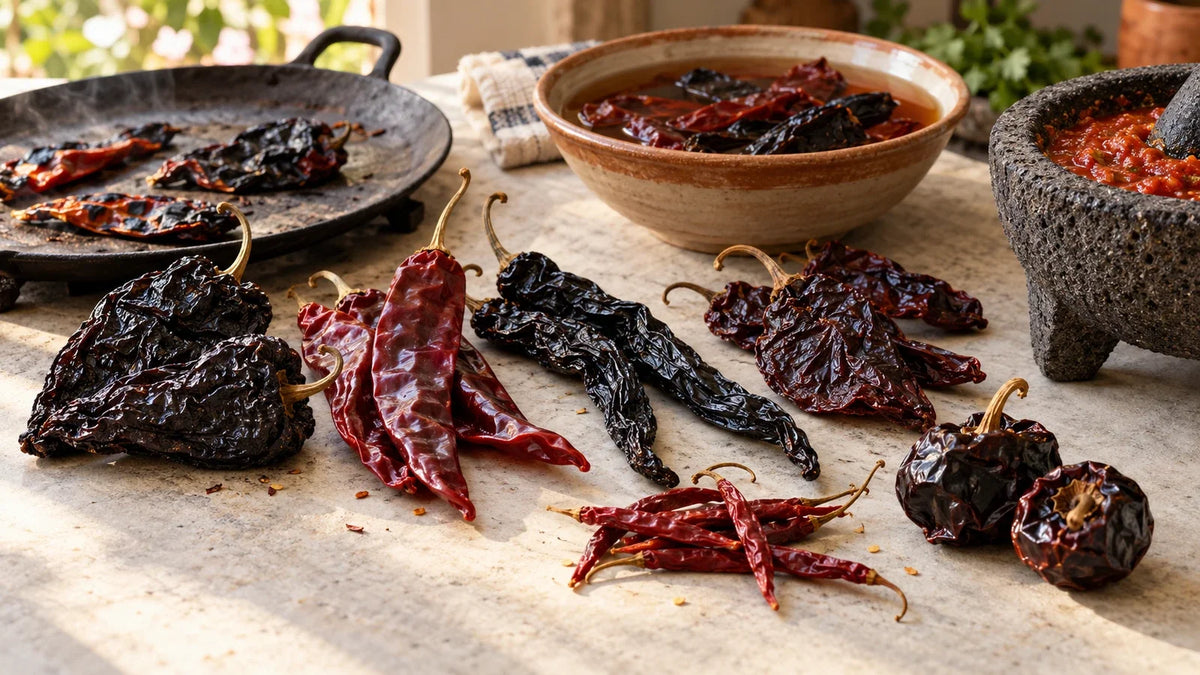
Anyone making a pot of pozole or a bowl of birria in Mexico almost always starts with a bag of dried peppers. They are the backbone of the cuisine: sweet and round like raisins, smoky like a campfire, or bright and clean like the slender chile de árbol. In our shop in Amsterdam, they sit in whole rows next to each other, and because they look so similar, we often get asked which one you actually need. They are the bags of Xatze and Tajín and the cans of La Costeña that you simply see sitting in supermarkets in Mexico, so you are cooking with the same peppers as a Mexican family at home. If you want the big picture first, read Mexican Cuisine 101.
Which dried Mexican pepper do you use for what?
For mild, sweet red sauces and stews, you use ancho and guajillo; for dark mole, pasilla and mulato; for smoke, chipotle; and for pure heat, chile de árbol or habanero. Cascabel sits somewhere in between, nutty and mild. The lines on the cards are our own estimate of the heat on a scale of 1 to 5, so it is just an indication: every harvest differs, always taste carefully.
 Ancho dried poblanoSweet, round, raisin notes. For salsa roja and stew1/5
 Guajillo the workhorse pepperFruity and bright red, for pozole and birria2/5
 Pasilla chile negroDark, slightly bitter, for mole and barbacoa2/5
 Mulato sister of the anchoDeep and sweet, with chocolate notes1/5
 Chipotle meco smoked jalapeñoHeavily smoked, brown and firm3/5
 Chile de árbol thin and brightClean, sharp heat for table salsa4/5
 Cascabel the rattleRound, nutty and slightly smoky2/5
 Habanero driedFruity and very hot, use sparingly5/5
Not sure which pepper to start with? Go for ancho and guajillo: with those two you make salsa roja, pozole and most red stews, and once you are used to that you add pasilla for depth or a chipotle for smoke.
What are dried Mexican peppers?
Dried Mexican peppers are ripe chili peppers that have been dried in the sun or in a dehydrator, making their flavor more concentrated and sweeter. What is striking is that a pepper in Mexico often gets a new name as soon as it is dried. The fresh poblano is called dried ancho, the chilaca becomes pasilla and a jalapeño that has been dried and smoked over a fire, we know as chipotle.
What is an ancho pepper?
 Xatze whole · 75 gThe bag to start with1/5
 Xatze whole · 1 kgFor those who cook often and a lot1/5
 Xatze ground powder · 50 gFor rubs, chili and beans1/5
 Xatze ancho paste paste · 250 gReady to rub on meat1/5
What is a guajillo pepper?
 Tajín whole · 75 gFor salsa, pozole and birria2/5
 Xatze whole · 1 kgThe large bag for the freezer or food service2/5
 Xatze ground powder · 50 gFruity and mild, for sprinkling2/5
 Xatze flakes flakes · 85 gCoarse, beautiful over eggs or pizza2/5
What is a pasilla pepper?
 Xatze whole · 75 gRaisin and cocoa, for mole2/5
 Tajín whole · 75 gThe same pepper as Tajín2/5
 Xatze powder ground · 50 gQuick depth in a sauce2/5
What is a mulato pepper?


View all dried Mexican peppers →
What is the difference between chipotle meco and morita?
 Meco Xatze · 40 gSmoked for a long time, brown and firm3/5
 Morita Mexus · 1 kgRed, fruity and smoked more gently3/5
 Ground chipotle Xatze · 50 gSmoky in a pinch, for rubs and mayo3/5
 Chipotle flakes Xatze · 85 gLarge flakes to sprinkle over3/5
Chipotle in adobo

 La Costeña in adobo · 199 gThe convenient can for home3/5
 La Costeña in adobo · 2.9 kgFoodservice can for the large kitchen3/5
How hot is chile de árbol?

 Tajín whole · 75 gBright and clean, for table salsa4/5Xatze whole · 75 gThe same pepper as Xatze4/5
 Xatze ground powder · 50 gOver pozole and fruit4/5
 Xatze paste paste · 250 gHeat from the pot, without the wait4/5
What is a cascabel pepper?

When do you use dried habanero?

Which dried peppers do you use for mole?
For mole poblano, you usually use ancho, pasilla and mulato, the trio that is sometimes called the holy trinity of mole in Mexico. Ancho brings sweetness, mulato depth and a hint of chocolate, and pasilla a slightly bitter, dark note. Together with roasted seeds, nuts, spices and often a piece of chocolate, that makes a thick, dark sauce. How exactly that works, and which ready-made mole paste you can use, you can read in Mole explained.
[[products:mexico-peppers-whole]]
How do you use dried peppers?
You use dried peppers in three steps: roast briefly, soak and puree. First wipe them clean with a dry cloth, cut off the stem and remove the seeds and the light ribs, because that is where much of the heat is and they make a sauce grainy.
Roast the peppers for half a minute on each side in a dry frying pan, just until they start to smell, and take them out before they turn black, because burnt peppers make your whole sauce bitter. Then let them soak in hot water for fifteen to twenty minutes, blend them with some soaking water, roasted tomato, onion and garlic, and strain the sauce so that the tough skins remain behind.
Finally, fry the sauce for a few minutes in a little hot oil: it will become darker and thicker, and the flavor rounder.
Whole or ground Mexican peppers?

[[products:mexico-peppers-ground]]
Dried peppers ancho, guajillo, pasillaWhole peppers to roast and soak yourselfShop nowGround peppers powder and flakesQuick heat and color, without soakingShop nowMexican ingredients chipotle, tomatillo, masaEverything for the Mexican pantryShop now Salsa and hot sauce Valentina, CholulaReady for the tableShop now
Recipes with dried Mexican peppers
In these recipes you see how dried peppers work, from a quick salsa to a stew that simmers for hours. Tacos are made with warm corn tortillas; read all about tortillas and masa and a complete taco night at home in the other guides.


Everything for Mexican cuisine
Dried peppers, chipotle in adobo, masa harina, beans and salsa, all in one place.
Frequently asked questions
How spicy is an ancho pepper?
Ancho is mild. It mainly adds sweetness and color, and most people who are not used to spice can cook with it without any problems.
Do you need to soak dried peppers?
For sauces, yes: after roasting briefly, leave them in hot water for 15 to 20 minutes so they soften and blend well. For salsa macha, you roast them in oil without soaking.
Why does my salsa made with dried peppers taste bitter?
Usually, the peppers have been roasted for too long or at too high a temperature. Half a minute on each side in a dry pan is enough; if they turn black, it is better to start over.
What is the difference between chipotle and jalapeño?
Chipotle is a ripe jalapeño that has been dried and smoked. This gives it a smoky, deeper flavor than a fresh jalapeño.
Can I replace ancho with guajillo?
In a red sauce or stew, yes, but the result will be fresher and less sweet. Mulato is closer in flavor to ancho.
How do you store dried peppers?
Follow the label. In general, keep them in a tightly sealed bag or jar, in a cool, dark place, so they remain flexible and retain their aroma.
What are the three peppers used in mole poblano?
Ancho, pasilla and mulato. Together they provide the sweetness, depth and dark, slightly bitter note that characterize mole.
With a bag of ancho and a bag of guajillo in the cupboard, and perhaps a can of chipotle in adobo beside them, you can make a lot of Mexican cuisine at home, from a bowl of salsa roja on a weekday evening to a pot of pozole for the whole family on Sunday. Take the time to roast and taste, because you will quickly notice how different all those peppers are and which ones you like best. If you are standing in the shop in Amsterdam in front of those long rows of bags and are not sure, feel free to ask us, and if you want to read more about masa, beans, mole and the rest of Mexican cuisine, start with Mexican cuisine 101.

