


Thai cuisine 101: how to cook Thai food at home
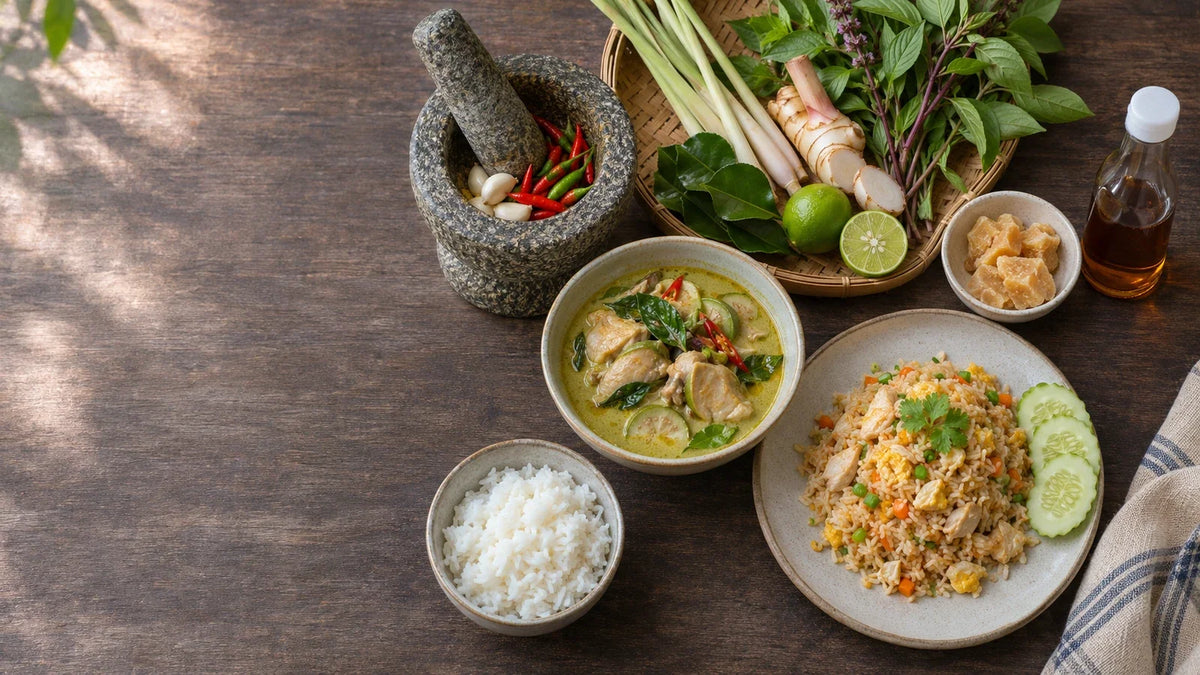
You can smell Thai food before it even hits the table: lemongrass and kaffir lime leaves steeping in coconut milk, garlic and peppers sizzling in a hot wok, a splash of fish sauce bringing it all together. It is a cuisine of contrasts, where sour, sweet, salty and spicy come together in a single bite and no one bats an eye if you sweat a little over your bowl of soup. You eat together, with rice for everyone and a few dishes in the middle, and whoever wants it spicier or fresher seasons their own plate. In our shop in Amsterdam, the Thai aisle is a place where people often stop for a moment, so in this guide we lay out where to begin.
What makes Thai cuisine so recognisable?
You recognise Thai cuisine by four flavours that come together in almost every dish—salty, sour, sweet and spicy—by fresh aromatics that determine the aroma, and by rice or noodles as a base.
- Salty and savoury: fish sauce (nam pla) is the salt of Thai cuisine. You also use light soy sauce, oyster sauce and shrimp paste (kapi).
- Sour: lime juice for a fresh, sharp sourness, and tamarinde for a softer, fruitier sourness, as in pad thai.
- Sweet: palm sugar, which tastes rounder and more caramel-like than regular sugar.
- Spicy: fresh Thai peppers, dried chilli flakes and the curry paste itself.
- Aroma: lemongrass (sereh/takrai), galanga (laos/kha), kaffir lime leaf (djeroek poeroet/makrut), coriander, Thai basil (horapa) and holy basil (krapow).
A Thai meal usually consists of a few dishes you share, with a plate of rice for everyone. You eat with a spoon and fork: you use the fork to push the food onto your spoon. You eat noodles and quick stir-fry dishes like pad krapow more as a standalone meal, and those are precisely what belong to Thai street food.
How do you balance Thai flavours?
Always taste just before you serve, because a curry or soup changes considerably in flavour during cooking. If it tastes flat, it is usually missing salt, so add a dash of fish sauce; if it has become too sharp or too salty, round it off with a little palm sugar, and if it feels heavy, a squeeze of lime juice makes everything lighter again. Only add the lime juice to the pan once it is off the heat, as in our recipes for tom yum and tom kha gai, because the fresh sourness fades when boiled.
Not every dish needs all four flavours equally strongly. Tom yum can be clearly sour and spicy, massaman is fuller and sweeter, and khao pad is mainly savoury. At Thai noodle stalls, a set is often placed on the table with fish sauce with peppers, sugar, dried chilli flakes and vinegar with peppers, so you can adjust it yourself. At home you recreate that with dried chilli flakes and a small bowl of fish sauce with chilli.
What products do you need for Thai cuisine?
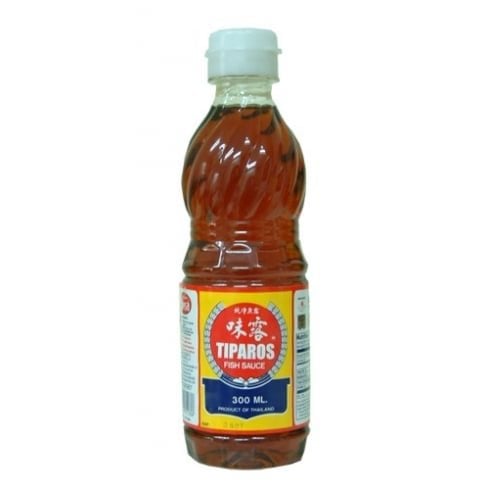
Tiparos Fish Sauce, curry paste, coconut milk, palm sugar, tamarinde, jasmine rice, rice noodles, oyster sauce, sweet chilli sauce and a few dried spices: with these ten products in the house you cook most of the dishes in this guide. They have a long shelf life, so you can build up your stock gradually. The curry pastes in our shop are the authentic tins and bags you see in supermarkets in Thailand, from brands like Mae Ploy and Lobo, with the same flavour as in a Thai kitchen.
 Fish sauce nam plaThe salt of Thai cuisine, in almost every dish
 Curry paste phrik kaeng · green, red, yellowCook in coconut oil for curry and soup
 Coconut milk kathiFor curry, tom kha gai and desserts
 Palm sugar nam tanRound sweetness that rounds off sharp and salty
 Tamarinde makhamSoft, fruity sour for pad thai and massaman
 Jasmine rice khao hom maliFragrant rice for curry and stir-fry
 Rice noodles sen lek · 3 mmFor pad thai and noodle soup
 Oyster sauce nam man hoiGives stir-fry sauce body and shine
 Sweet chilli sauce nam jim kaiDipping sauce for grilled chicken and spring rolls
 Dried spices kaffirlime leaf · makrutA few leaves in soup or curry
Fresh herbs give the freshest flavour. Lemongrass, galanga, Thai basil and fresh peppers can be found in the shop in Amsterdam; online you choose dried, such as X.O. Dried Lemongrass and X.O. Galangal Root, or a paste where the work is already done. Dried pieces of lemongrass and galanga you let steep in soup or curry and remove before serving. How to use each herb you read in Thai herbs, which bottle serves what in Thai sauces, and more about fish sauce and coconut milk in Fish Sauce 101 and Coconut Milk 101.
View all Thai herbs and cooking ingredients →
How does Thai cuisine differ by region?
Thailand has roughly four regional cuisines: the centre around Bangkok, the north, the northeast (Isaan) and the south, each with its own accents in spice, sourness and what is served with rice.
- Central: the cuisine you know best in the Netherlands, with curries in coconut milk, stir-fries and jasmine rice.
- North: around Chiang Mai you eat milder, with sticky rice and khao soi, a noodle soup in a creamy curry broth.
-
 Isaan: sticky rice, papaya salad (som tam), larb and grilled chicken (kai yang), sharply sour and spicy. For som tam there is fish sauce for papaya salad, and for kai yang a ready-made marinade.
- South: lots of coconut, turmeric and seafood, and often the spiciest in the country.
For the cuisine of the north and Isaan you need sticky rice, such as Aroy-D Thai Glutinous Rice, which you soak and steam instead of boiling. Which rice you use for what else you read in this rice guide.
Which Thai dishes should you know?
Pad thai, green curry, tom yum, pad krapow and khao pad are the Thai dishes you encounter first, and with the recipes below you can make all ten at home.
For pad thai you use 3 mm rice noodles, for pad see ew wide rice noodles, and if you want pad krapow on the table quickly, grab a packet of Lobo Holy Basil Seasoning Paste. Which noodle suits which dish, you can read in Asian Noodles 101, and the difference between green, red, yellow, massaman and panang in Thai curry explained.
Almost every curry starts the same way: you heat a part of the coconut milk until fat comes to the surface and fry the curry paste in it for a few minutes, until your whole kitchen smells like it, and only then add the meat and the rest of the coconut milk. For stir-fried dishes like pad krapow, pad see ew and khao pad, it is important that everything is cut and measured out before the wok gets hot, because on high heat you no longer have time to peel another clove of garlic, and rice that has been in the refrigerator overnight stays nice and loose in the wok.
Where can you find Thai products by category?
You can find Thai products with us by category, from curry paste and fish sauce to coconut milk, rice, noodles and snacks. Choose below what you want to continue with.
 Curry phrik kaengPastes for green, red, yellow, massaman and panangShop nowSauces and condiments dipping sauces and pastesSweet chilli sauce, tamarindo, palm sugar and moreShop now
 Fish sauce nam plaSquid, Tiparos, Megachef and a vegan variantShop now
 Oyster sauce nam man hoiAlso vegan, based on shiitakeShop now
 Soy sauce si-ioLight, dark, sweet and seasoning sauceShop now
 Coconut milk kathiCoconut milk, coconut cream and powderShop now
 Spices samun phraiLemongrass, galangal, lime leaves and peppersShop now
 Rice khaoJasmine rice, sticky rice and pandan riceShop now
 Noodles kuaitiaoRice noodles, glass noodles and instantShop now
 Snacks khanomSeaweed snacks and more to snack onShop now
Read more about Thai cuisine
Not sure where to start? Stock up on a jar of green curry paste, two cans of coconut milk, a bottle of fish sauce and a bag of jasmine rice, because with these you can make green curry this week and still have enough left for a second time.
De Thaise basis voor je voorraadkast
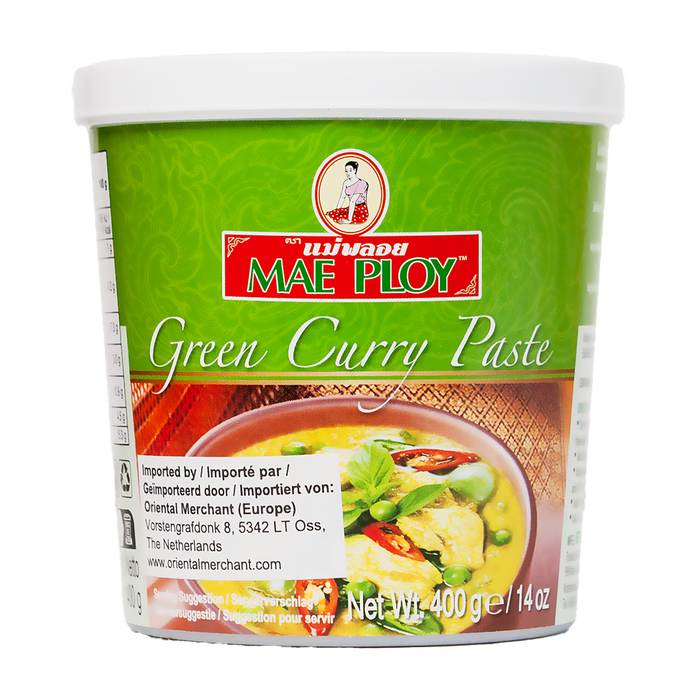
Mae Ploy Green Curry Paste
View product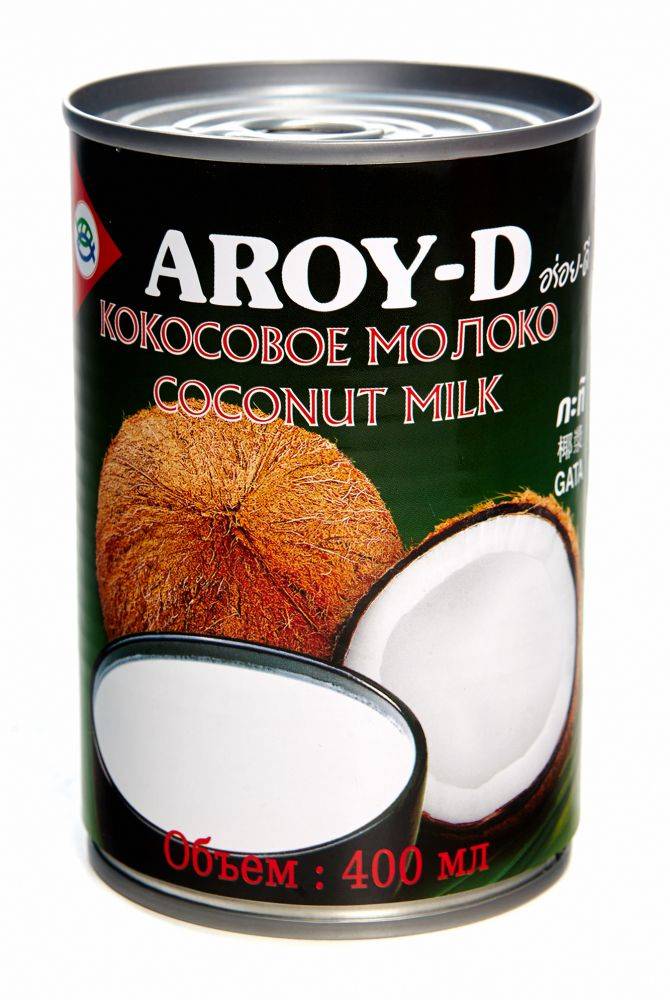
Aroy-D Coconut Milk A
View product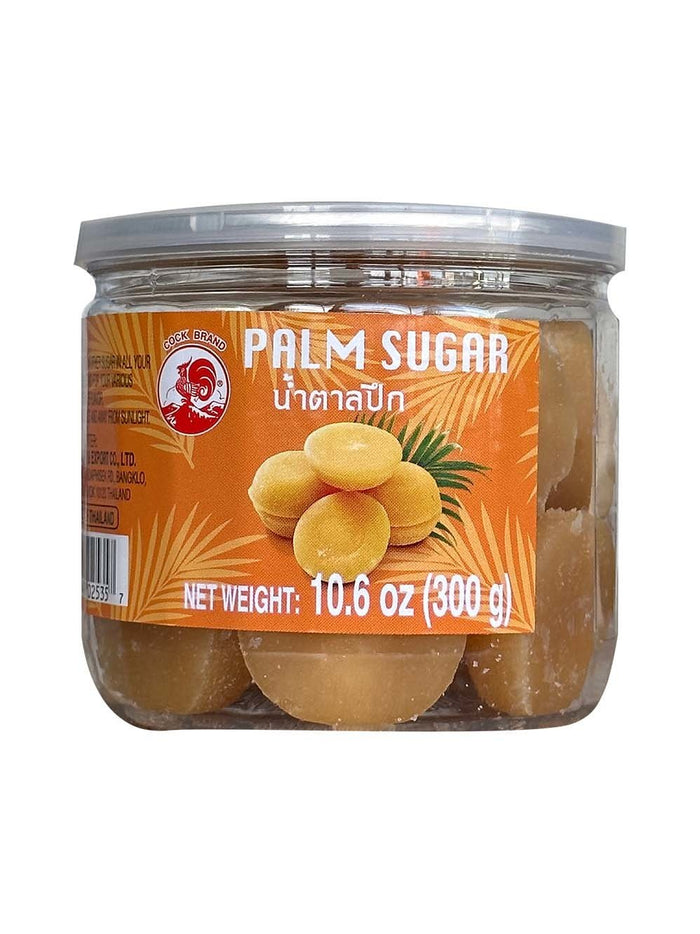
Cock Brand Palm Sugar
View product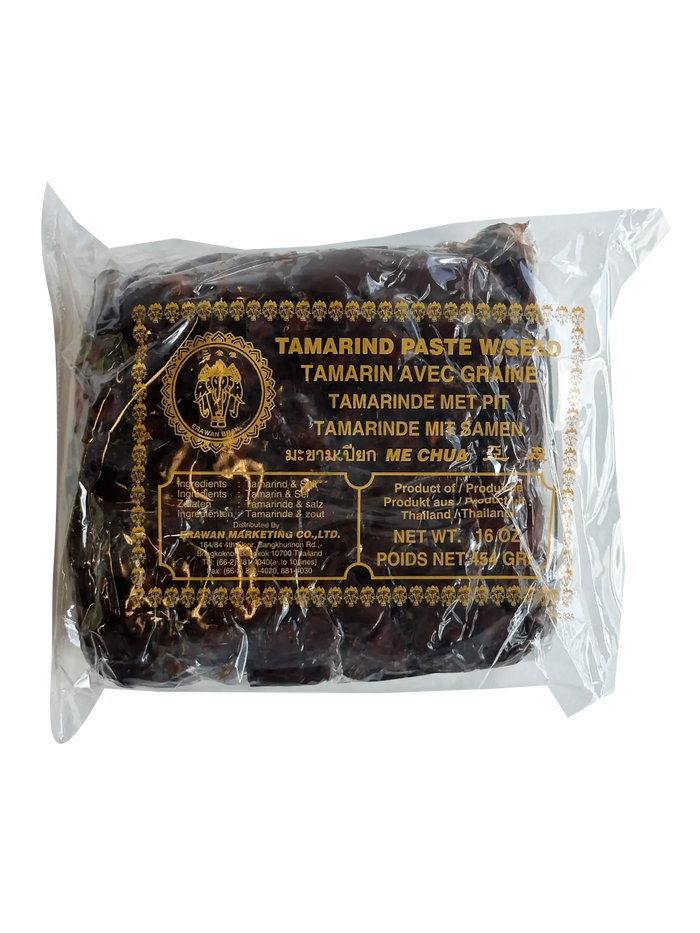
Erawan Tamarind Paste with Seed
View product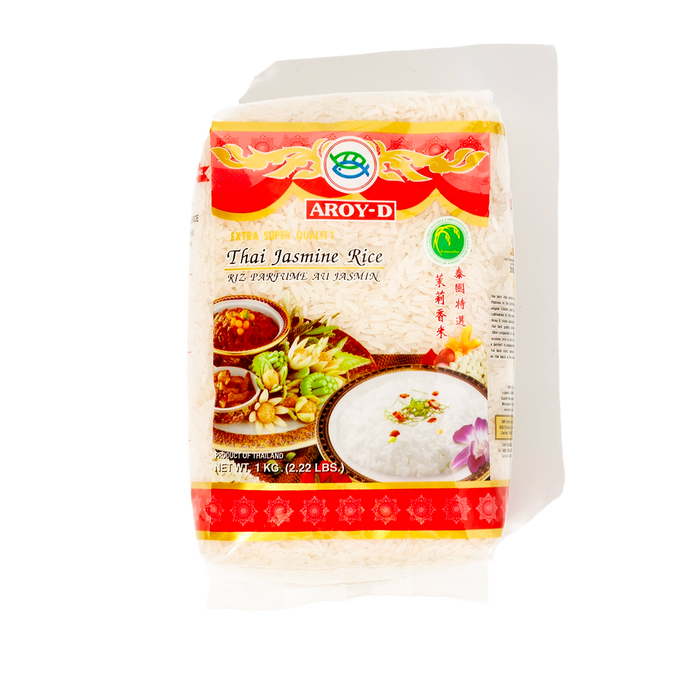
Aroy-D Thai Jasmine Rice
View product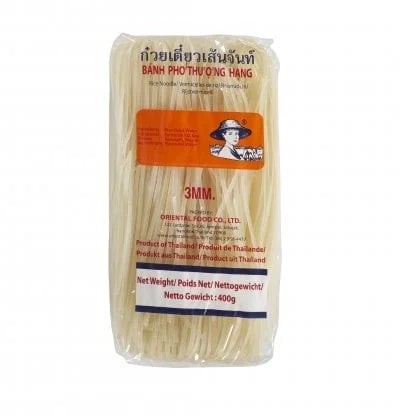
Farmer Brand Rice Sticks 3mm
View product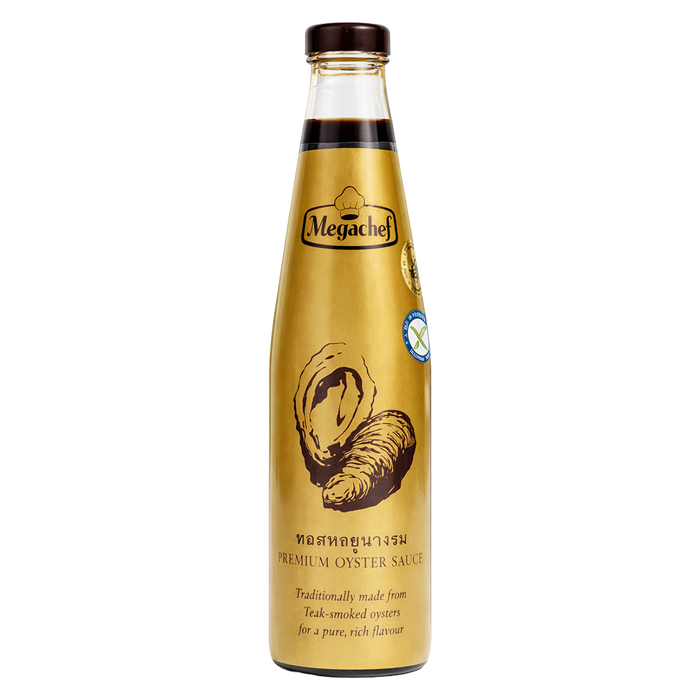
Megachef Premium Oyster Sauce
View product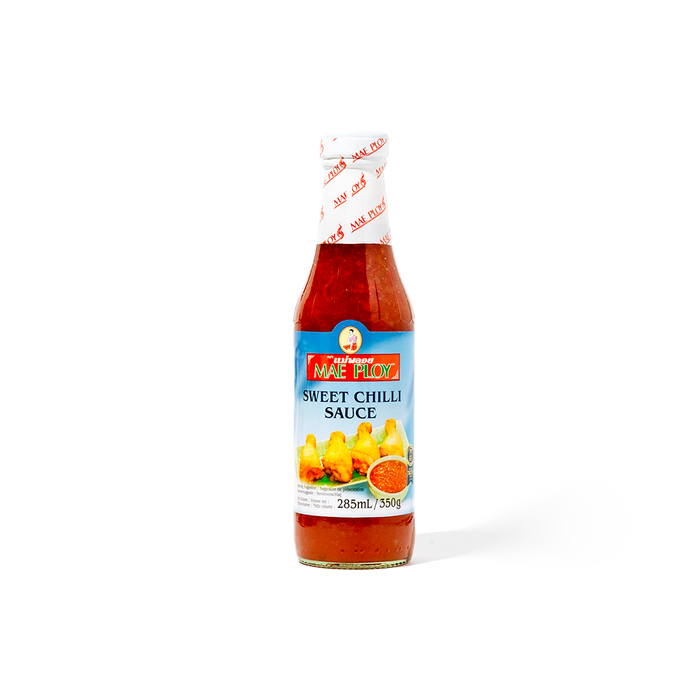
Mae Ploy Sweet Chilli Sauce
View productEverything for Thai cooking
From curry paste and fish sauce to coconut milk, jasmine rice and rice noodles, all together on one page.
Frequently asked questions
Is Thai food always spicy?
No. Massaman, tom kha gai, pad see ew and khao pad are mild, and with curry you control the heat yourself with the amount of paste. If you want it hotter, put Sriraja Panich on the table; find out more in Sriracha explained.
What is the difference between Thai basil and holy basil?
Thai basil (horapa) is sweet and anise-like and goes in green and red curry. Holy basil (krapow) is peppery and belongs in pad krapow; dried you can find it as Nguan Soon Dried Holy Basil Leaf.
Can I replace fish sauce?
For a vegan dish use Nature's Charm Vegan Fish Sauce or light soy sauce. The flavour will be different, though, because fish sauce gives a deep, salty umami that is difficult to fully replicate.
What rice do you eat with Thai food?
With most dishes you eat jasmine rice, such as Aroy-D Thai Mali Hom Rice. In the north and in Isaan you eat sticky rice, which you roll into a ball with your hands.
What is the difference between galangal and ginger?
Galangal (laos/kha) is harder, peppery and fresher in flavour than ginger, and gives tom kha gai its character. Ginger is warmer and sweeter, so it is not a true substitute.
What is the difference between green and red curry?
Green curry paste is made from green peppers, red from red peppers, and how they are named differs by brand. Read all about the five best-known curries in Thai curry explained.
How do you store curry paste after opening?
Follow what is on the label. Always use a clean, dry spoon and then close the packaging tightly.
The best way to get to know Thai cuisine is by cooking and especially by tasting, because after a few times you will naturally notice that you add another dash of fish sauce or a squeeze of lime without thinking, and that a jar of curry paste and a few cans of coconut milk simply belong in your cupboard. If you are standing in the shop in Amsterdam in front of the Thai shelf, with the brands that Thai cooks also have in their cupboard at home, and you do not know which curry paste or which fish sauce to get, feel free to ask us, because we are happy to help you think it through. All the recipes are together in our Thai recipes, and the entire selection can be found in Thai cuisine.

